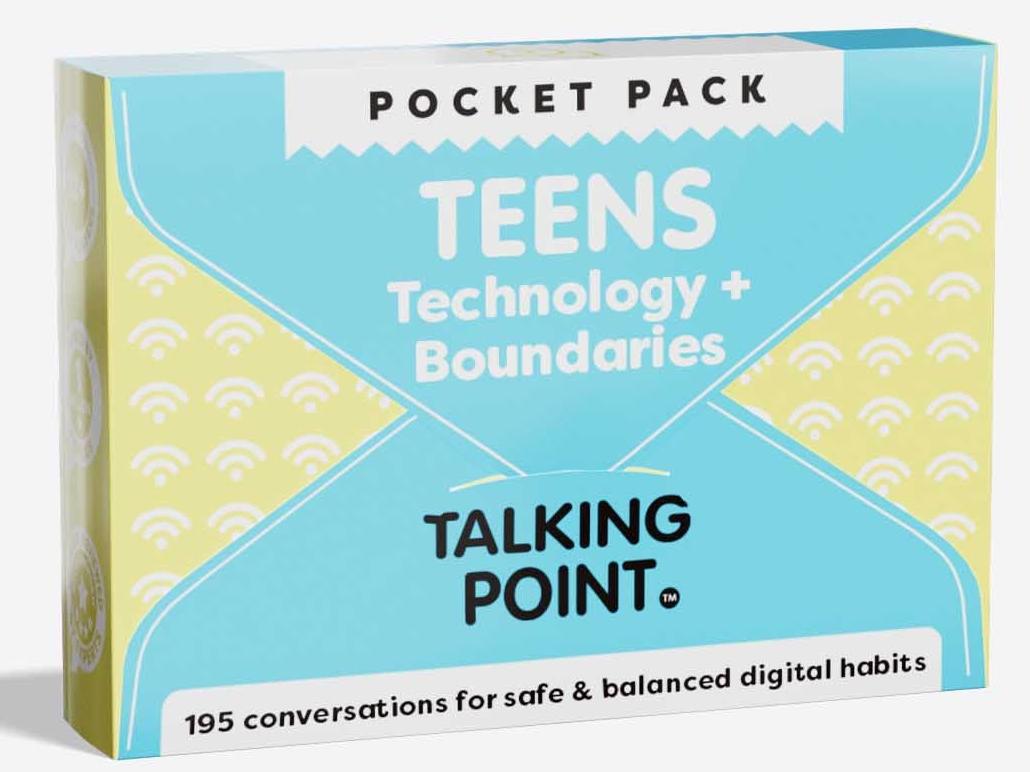
Teens: Technology & Boundaries
Your Teen Spends 8+ Hours A Day Online.
How Much Do You Know About What They Do There?

These cards make the conversations you’ve been avoiding feel natural, safe, and actually productive.
"Can we talk?"
Those three words shouldn't feel this hard.

If you're the parent of a teenager, you know exactly what happens next:
"About what?"
"I'm fine."
"Can we do this later?"
One-word answers. Shrugs. Eyes glued to a screen.
You want to talk about what they're seeing online. About screen time. About the things that keep you up at night - cyberbullying, online predators, the impossible beauty standards, the hours disappearing into TikTok.
But every time you try, it either turns into a fight... or they shut down completely.
Here's what no one tells you:
It's not that your teen doesn't want to talk to you.
It's that neither of you knows how to start these conversations without it feeling like an interrogation.
There's a better way
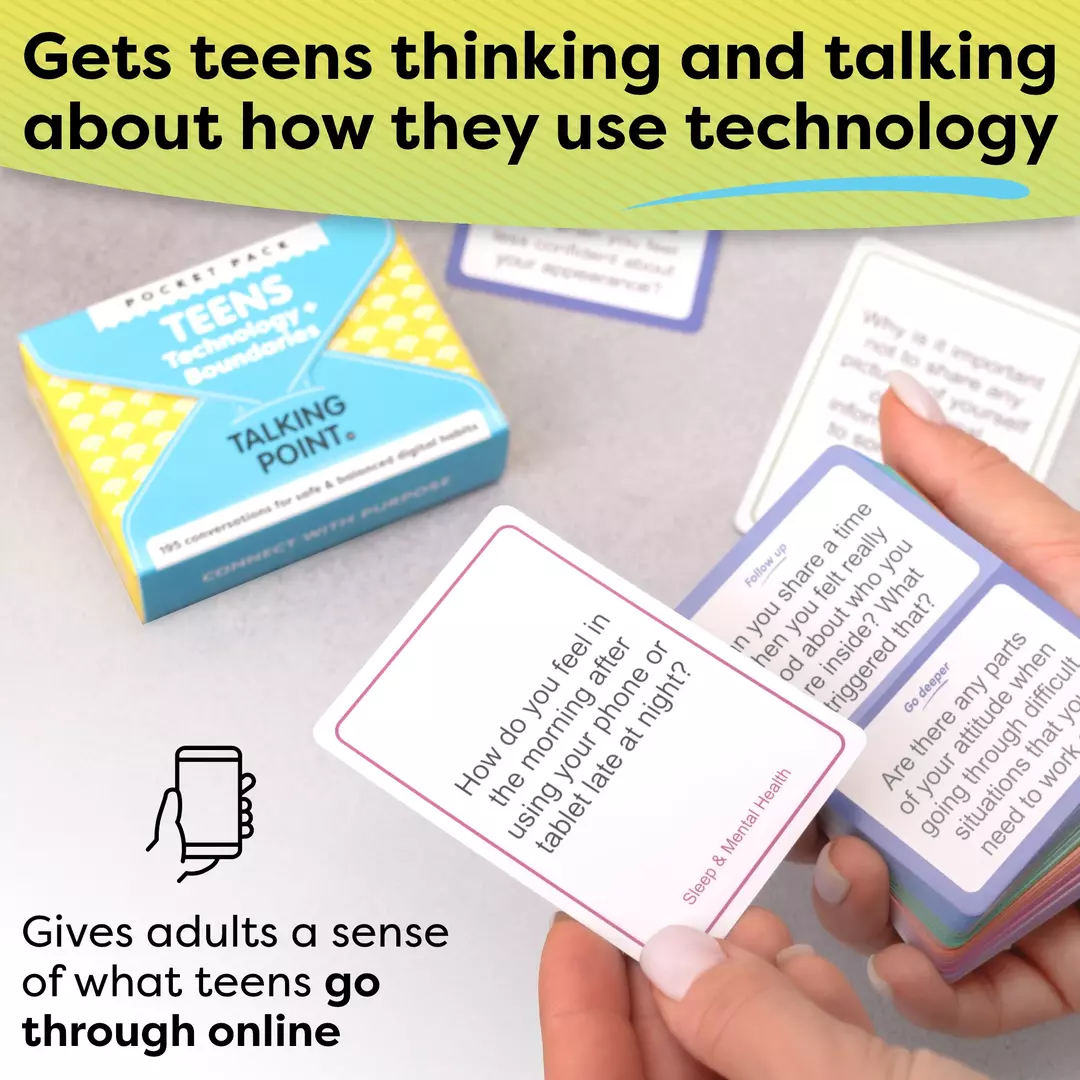
Teens: Technology + Boundaries is a pocket-sized pack of 195 expert-approved conversation starters designed to help you talk about screens, social media, and online safety - without the power struggles.
No lectures. No judgment. Just questions that actually get your teen talking.
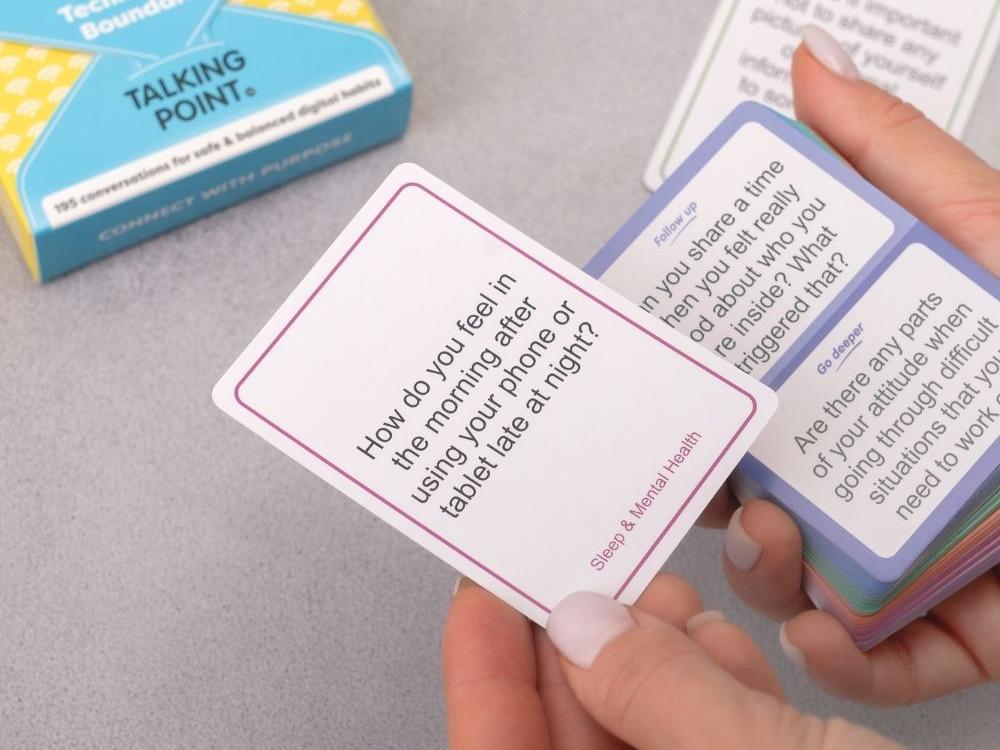
How it works:
It's almost too simple
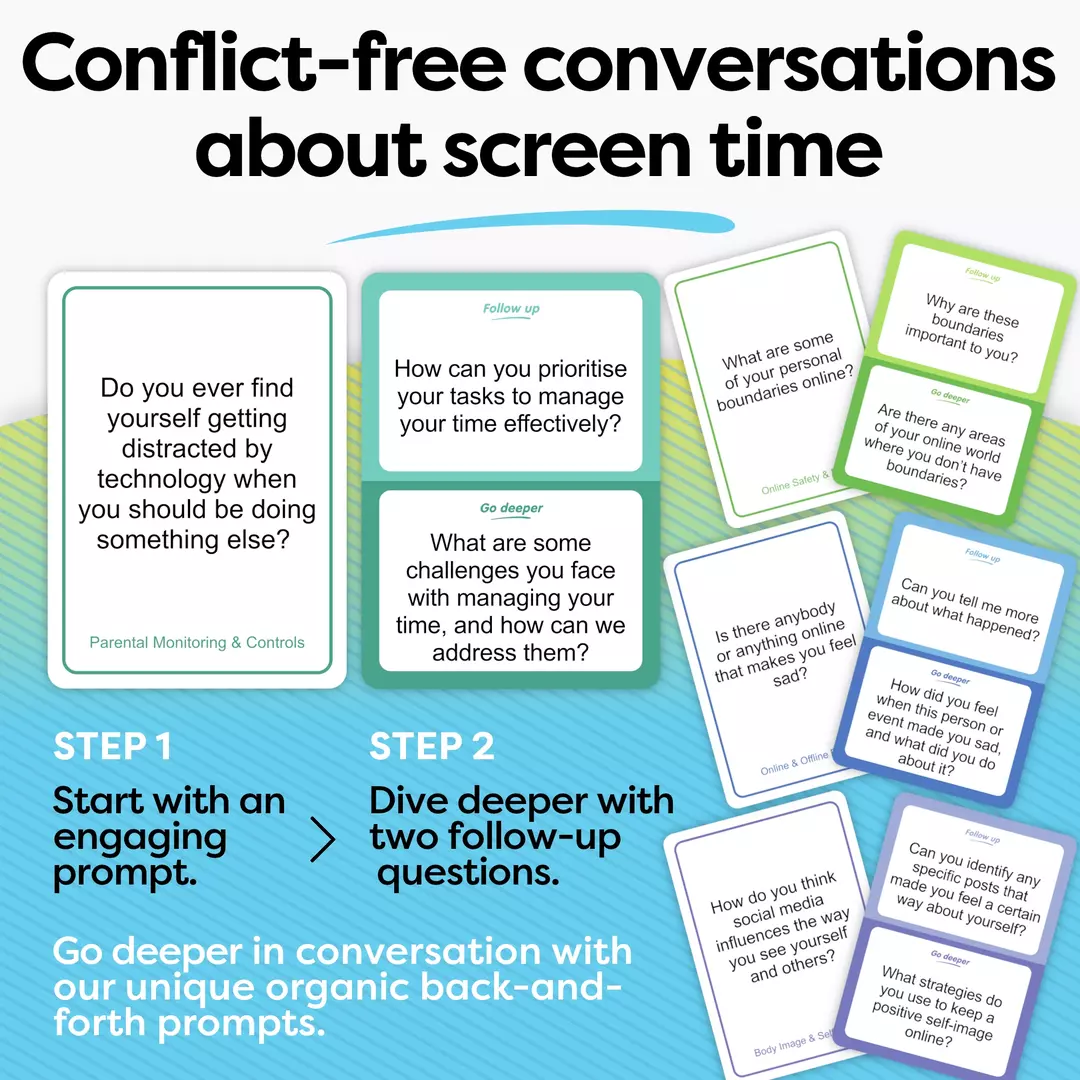
1. Pick a card

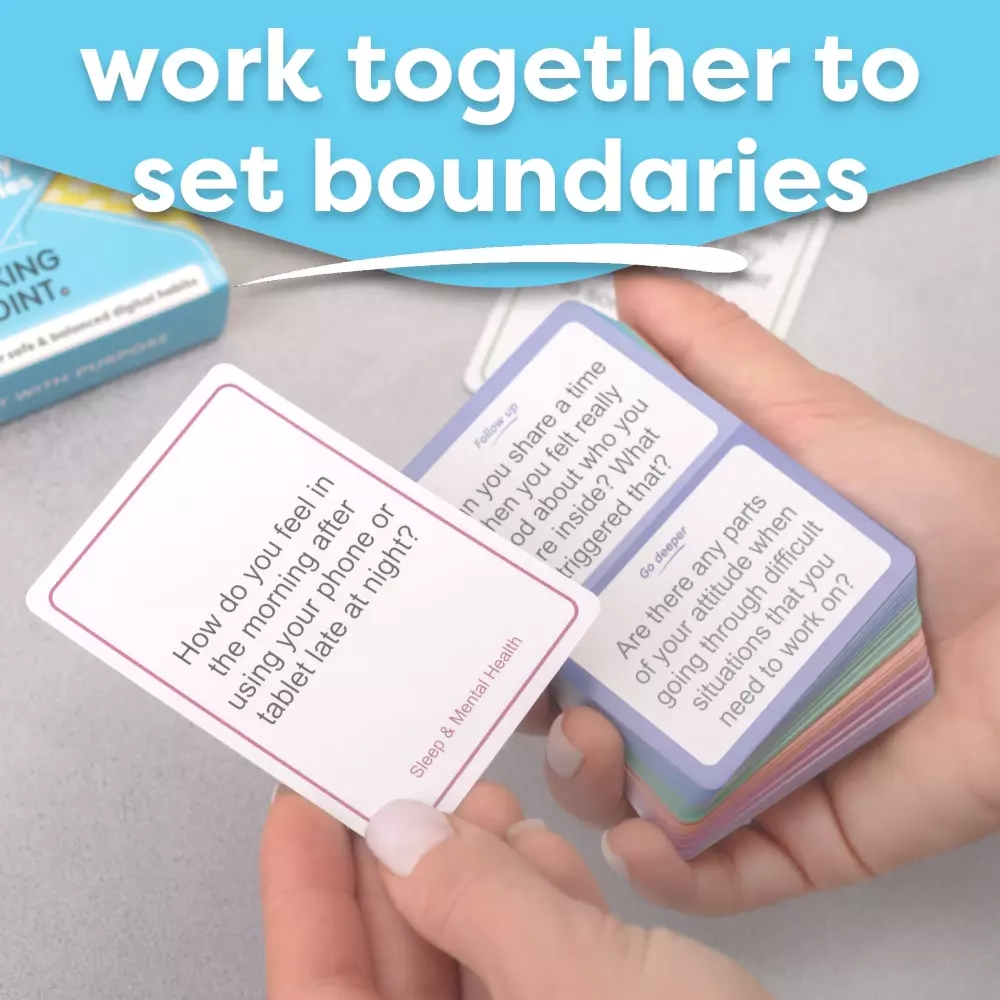
Choose from any of our expert-designed, 7 color-coded categories.
2. Ask the opening question
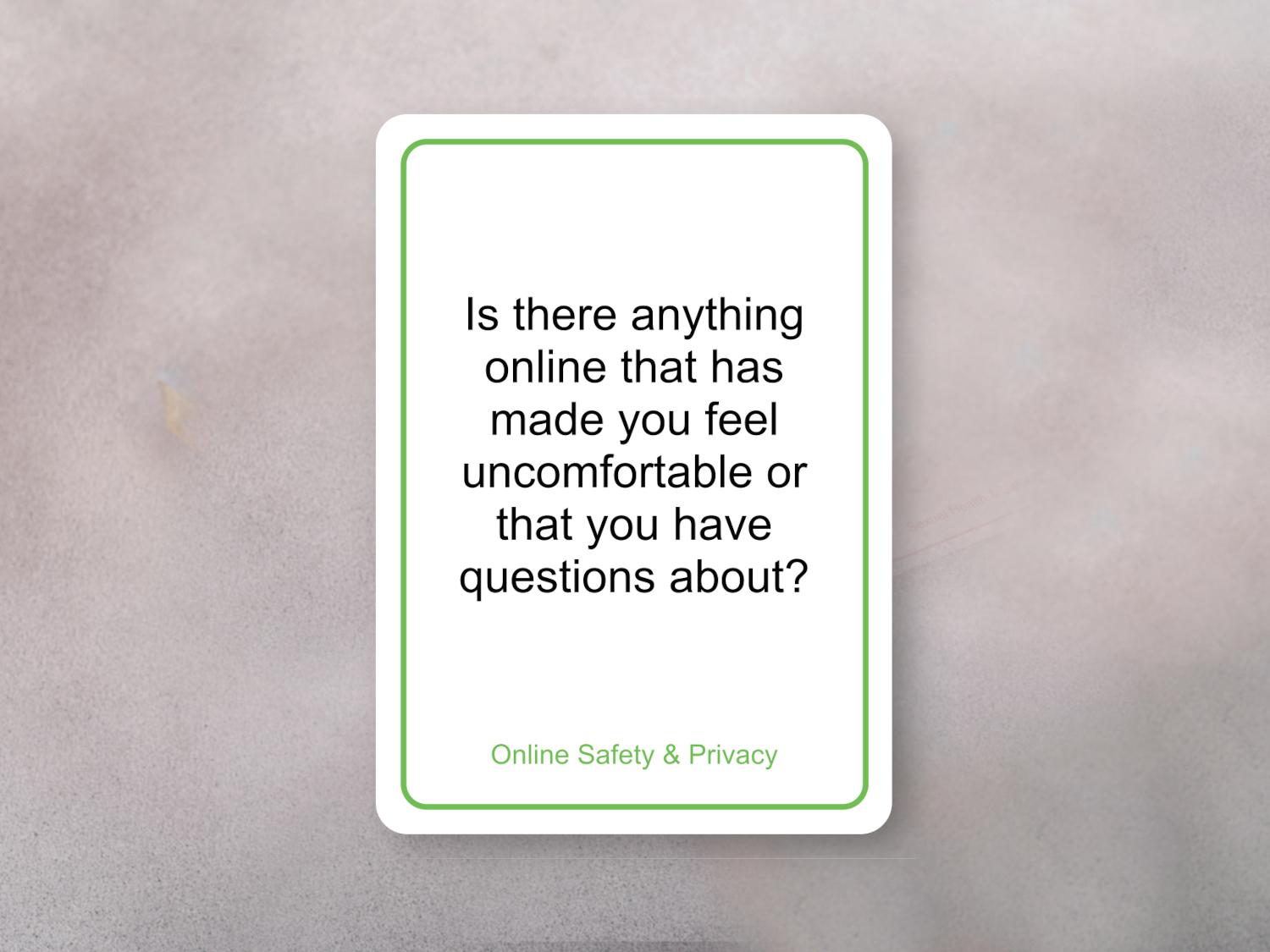
Each opening prompt is designed to invite conversation, not defensiveness.
3. Go deeper with follow-ups
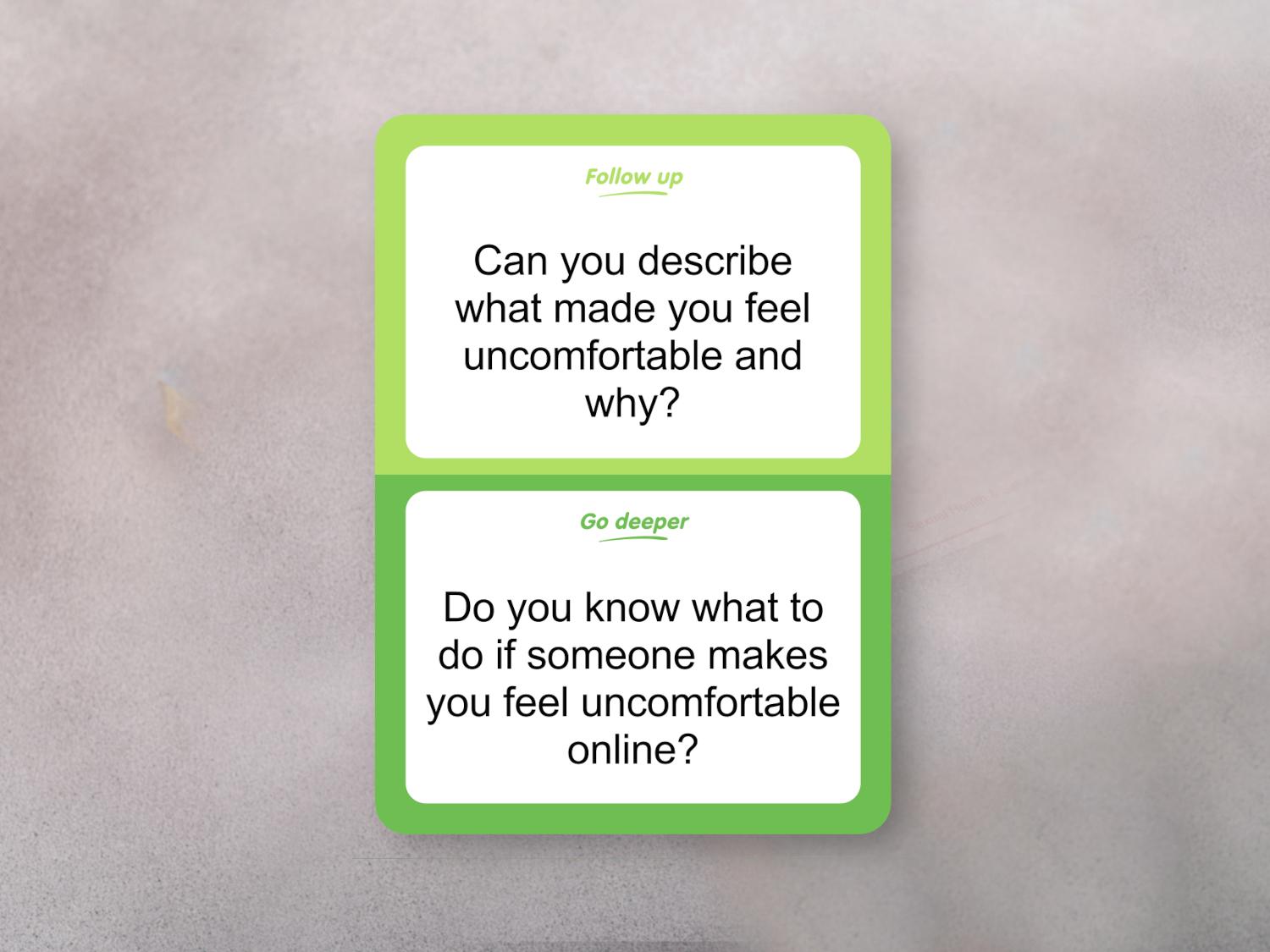
Use one, use both, or just let the conversation flow naturally. Your teen sets the pace.
That's it!
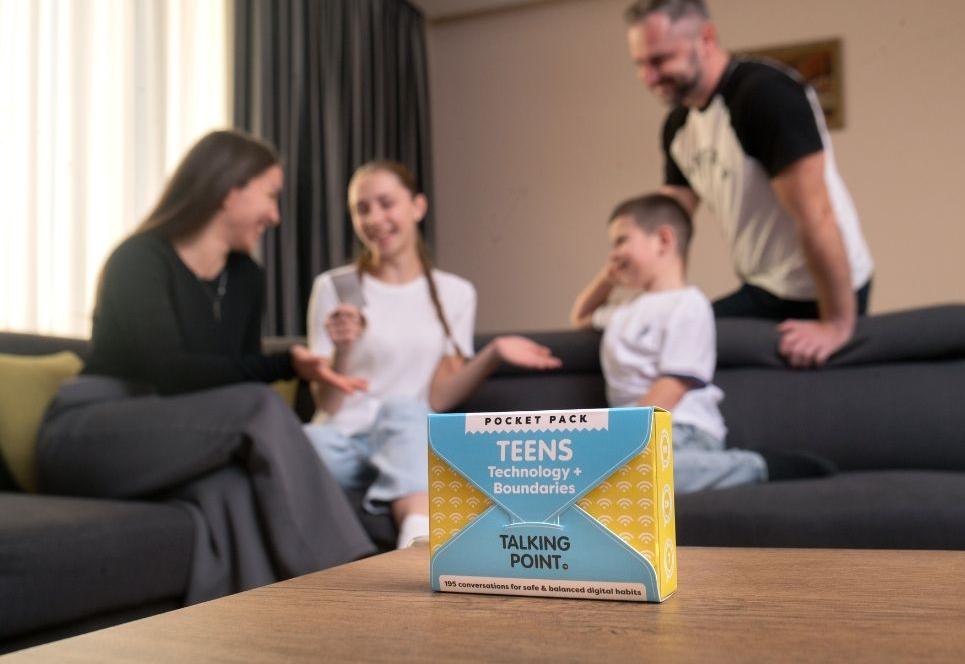
Ten minutes at dinner. During a car ride. Before bed. Whenever feels right.
No pressure. No performance. Just connection.
⭐⭐⭐⭐⭐
"I don't have to overthink what discussions need to happen or how to phrase things."
Clara M
See What's Inside
Try a card right now


Notice something?
These aren't yes/no questions.
They're not lectures disguised as questions.
They don't put your teen on the defensive.
They're genuine, curious prompts that make your teen think - and actually want to share their answer.
Why These Cards Work When 'Just Talking' Doesn't

You've probably tried having these conversations before.
Maybe you asked, "So what are you doing on your phone all the time?" and got an eye roll.
Or you said, "We need to talk about screen time," and watched your teen's walls go up immediately.
Here's the problem: Even with the best intentions, it's incredibly easy to ask questions that trigger defensiveness instead of dialogue.
But here's the good news:
When you ask the RIGHT questions - questions that come from curiosity instead of judgment - something amazing happens:
Your teen actually wants to talk.
Not because you forced them. Not because they're in trouble.
But because you're genuinely interested in their world, and they can feel the difference.
These Cards Help You:
Understand their digital world
You'll learn what apps they love, what creators they follow, how they express themselves online.
Build trust before crisis hits
When you have regular, low-pressure conversations about tech, your teen learns: "I can talk to Mom/Dad about this stuff." So when something scary happens, they already know you're safe to come to.
Guide instead of control
Instead of imposing rules that breed resentment, you'll have conversations that help your teen develop their own healthy boundaries and critical thinking skills.
Stay connected
Research shows that teens who have regular meaningful conversations with their parents have better mental health, higher self-esteem, and stronger family relationships.
Discover who your teen is becoming
Technology is where teens explore identity, creativity, and connection. These cards help you see that side of them.
Reduce arguments about screens
When decisions are made through conversations built on trust, respect and understanding, there’s less pushback, more alignment and greater cooperation.
Every Single Question Developed & Approved By Experts
A panel of global experts in adolescent psychology, parent-teen communication, digital wellness, and child development spent over 100 hours collaborating to create these prompts.
Then, an independent panel of experts spent another 20+ hours reviewing, refining, and approving every single question.
These are effective and intentional.
65+
Global Experts
100+
Development Hours
195
Approved Questions
7
Critical Categories
The result? Questions that:
Open dialogue instead of shutting it down
Let your teen feel heard instead of interrogated
Address sensitive topics without shame or judgment
Go deep without pushing too hard
⭐⭐⭐⭐⭐
"The questions are thoughtful and cover topics I wouldn't have even considered, making them perfect for sparking meaningful conversations."
Frank B
Meet Some Of Our Experts

Nicole Arzt
Author and Licensed Marriage and Family Therapist

Brooke Leith
Therapist, Writer and Mental Health Counselor

Ross du Preez
Leading Family Mediator and Conflict Coach

Tegan Jones
Certified Counsellor, Behavioral Scientist, Mental Health Expert.
What's inside the pack?
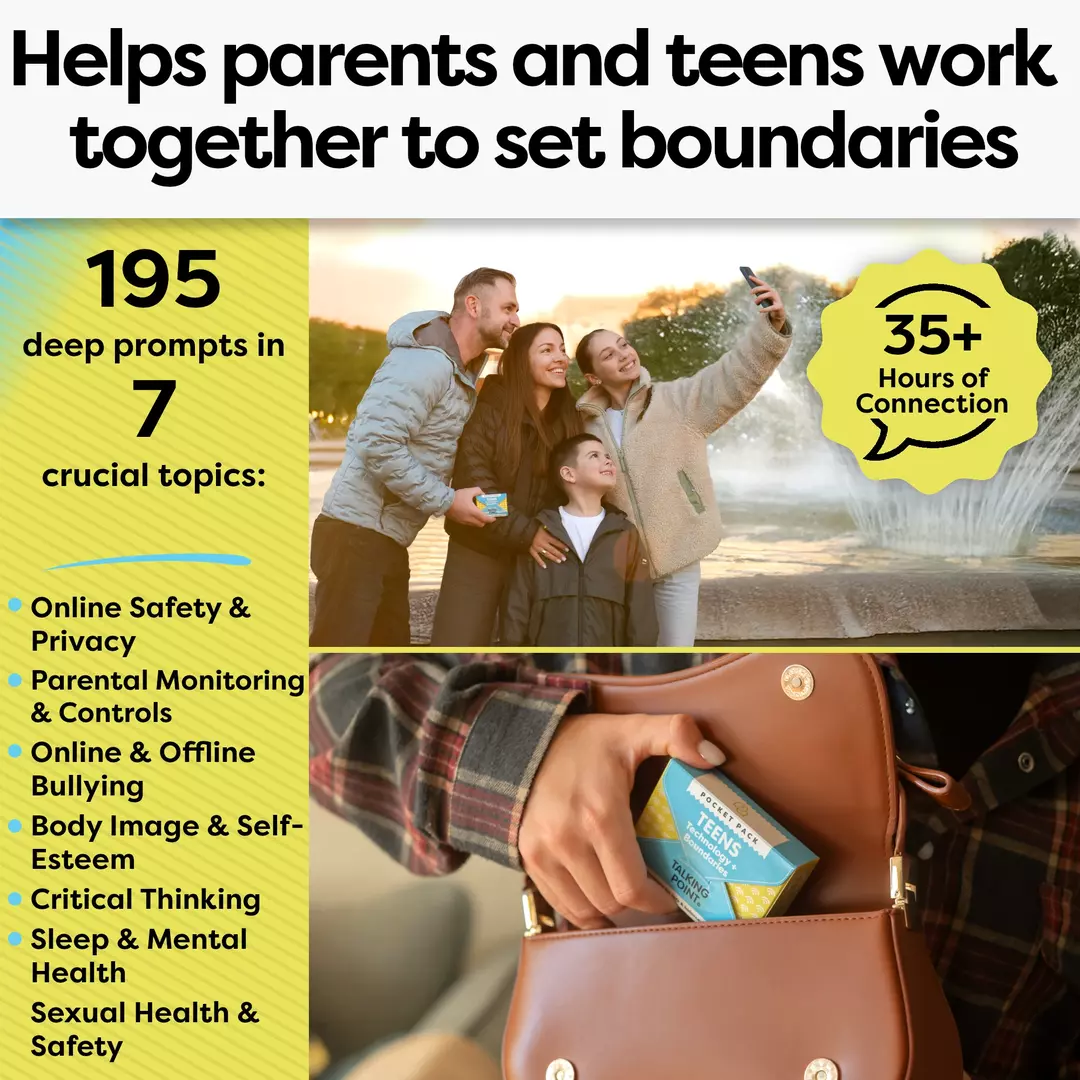
195 Expert-approved Prompts Across 7 Crucial Categories
🛡️
Online Safety & Privacy
Discuss strangers online, privacy settings, and what information is safe to share - without sounding paranoid.


⚖️
Parental Monitoring & Control
Discuss boundaries, trust, and privacy in age-appropriate ways. Set guidelines together instead of imposing rules.


😔
Cyberbullying (Online & Offline)
Create a safe space to talk about what's happening at school/online. Know the signs. Be the person they come to.


💪
Body Image & Self-Esteem
Navigate the impossible beauty standards, filters, and comparison traps that social media creates.


🧠
Critical Thinking & Media Literacy
Help your teen spot fake news, understand algorithms, and think critically about what they see online.


📱
Sleep & Mental Health
Help your teen understand how late-night scrolling affects their mood, grades, and health.


🔞
Sexual Health & Safety
Talk about sexting, consent, and online predators before something happens.


But Don't Just Take Our Word For It
Here's what parents are saying
You Might Be Wondering
The Science
Why conversation is your best defence against screen addiction
70%
The happiest people spend 70% more time having conversations than the unhappiest people.
46%
of teens report being "almost constantly" online - up from just 24% in 2015. Almost double in 10 years.
72%
of parents say their teen is often or always distracted by their phone during any parent-led conversations.
1 Hour
Today's teens are spending 1 hour LESS per day in face-to-face interaction than teens in the 1980s.
But here's the good news:
Research shows that just one meaningful conversation per day increases happiness and reduces stress.
Couples who spend more time talking report significantly higher relationship satisfaction.
And back-and-forth conversation directly improves brain development and language processing in young people.
Translation? The antidote to screen addiction isn't more rules or more monitoring software.
It's more conversation.
And that's exactly what these cards give you.
What Happens If You Don't Have These Conversations?
If you wait until there’s a problem, you’re already behind.
Most parents don’t lose connection in one big moment.
They lose it in hundreds of tiny missed chances - car rides, dinners, the 3 minutes before bed - where the phone wins and the conversation doesn’t happen.
Since 2010, anxiety has risen 139% for young adults (18-25) and depression has risen over 150% for teenagers.
46% of teens are "almost constantly" online - meaning they're never fully present, even when they're sitting right next to you.
Teens who experience cyberbullying are more than four times as likely to report suicidal thoughts or attempts than those who don’t.
And here's the part that should terrify every parent:
The average teen spends 8 hours and 39 minutes per day on screens - but the average American family spends just 6 hours and 17 minutes of quality time together per WEEK.
Do the math.
Your teen is spending more time with their screen in ONE DAY than they spend with you in an entire week.
And during that screen time, they're:
Seeing content you'll never know about.
Forming beliefs about their body, their worth, their future.
Making decisions about who to trust, what to share, and what risks to take.
Building their identity largely without your input.
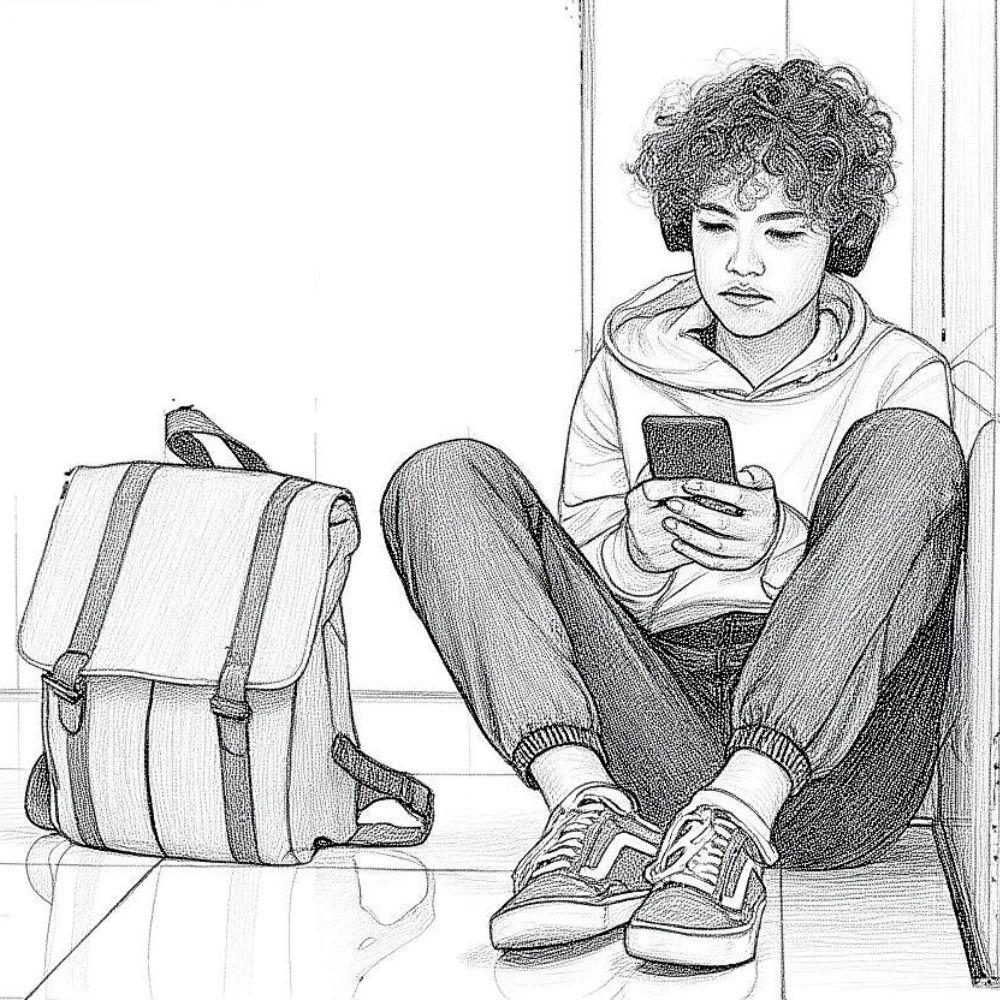

The question isn't whether you should talk to them about this.
The question is: Will they come to you when something goes wrong?
Because something WILL go wrong. A friend will send them something disturbing. They'll see content that confuses or upsets them. Someone online will make them uncomfortable. They'll face pressure to do something they're not ready for.
In that moment, will they come to you?
Or will they handle it alone because the door was never open?
One parent who learned this the hard way said:
"Having grown up with no guardrails and no conversations about the internet, I found myself in a bad situation that lasted many years. These cards help me make sure my son doesn't face the same thing."
Carrie P.
These cards keep that door open.
They make the hard conversations easier - so when the crisis comes (and it will), your teen already knows: "I can talk to Mom or Dad about this."
That's what this buys you.
Not just a pack of cards.
The peace of mind that when your teen needs you most, they'll actually come to you.
Here's What You Get Today
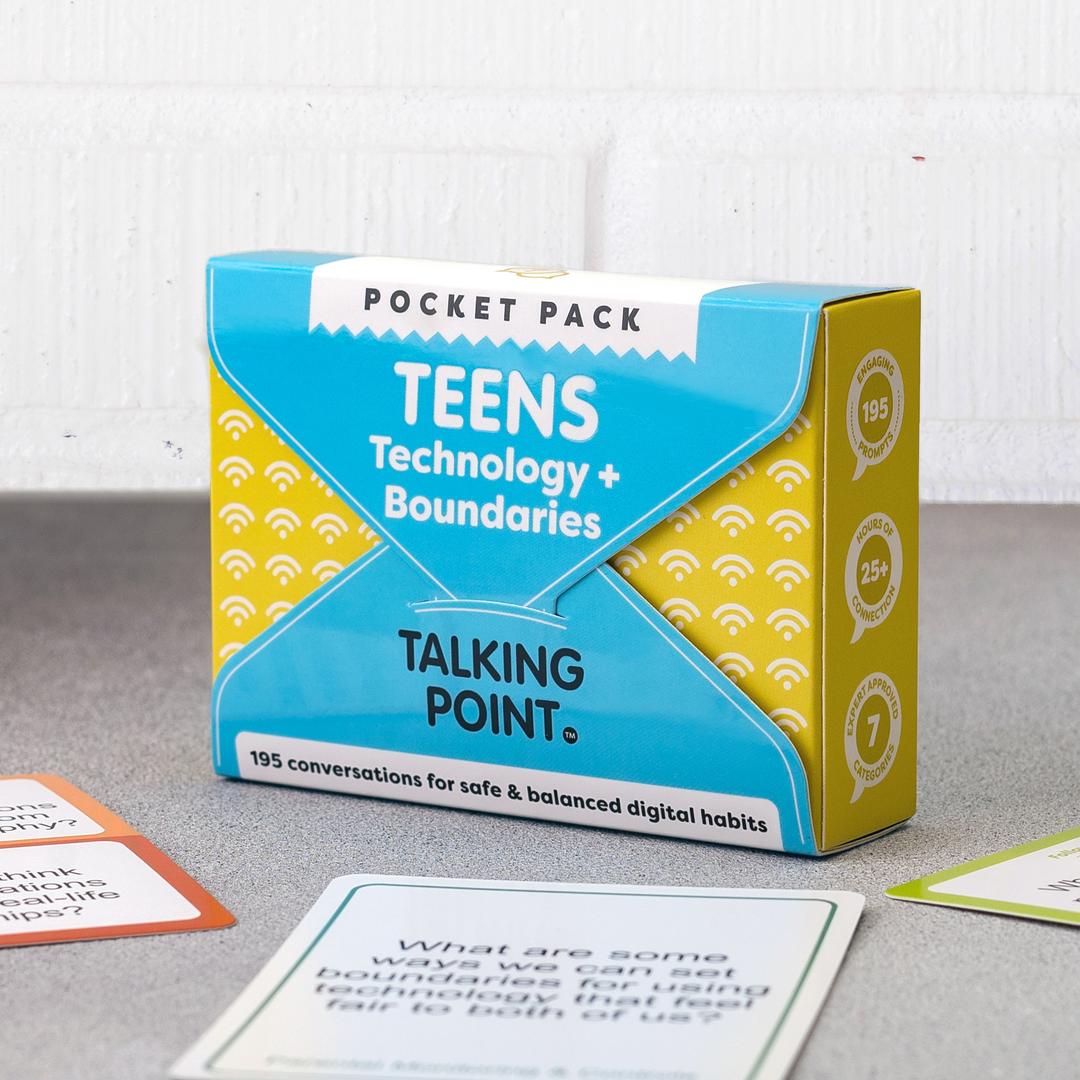
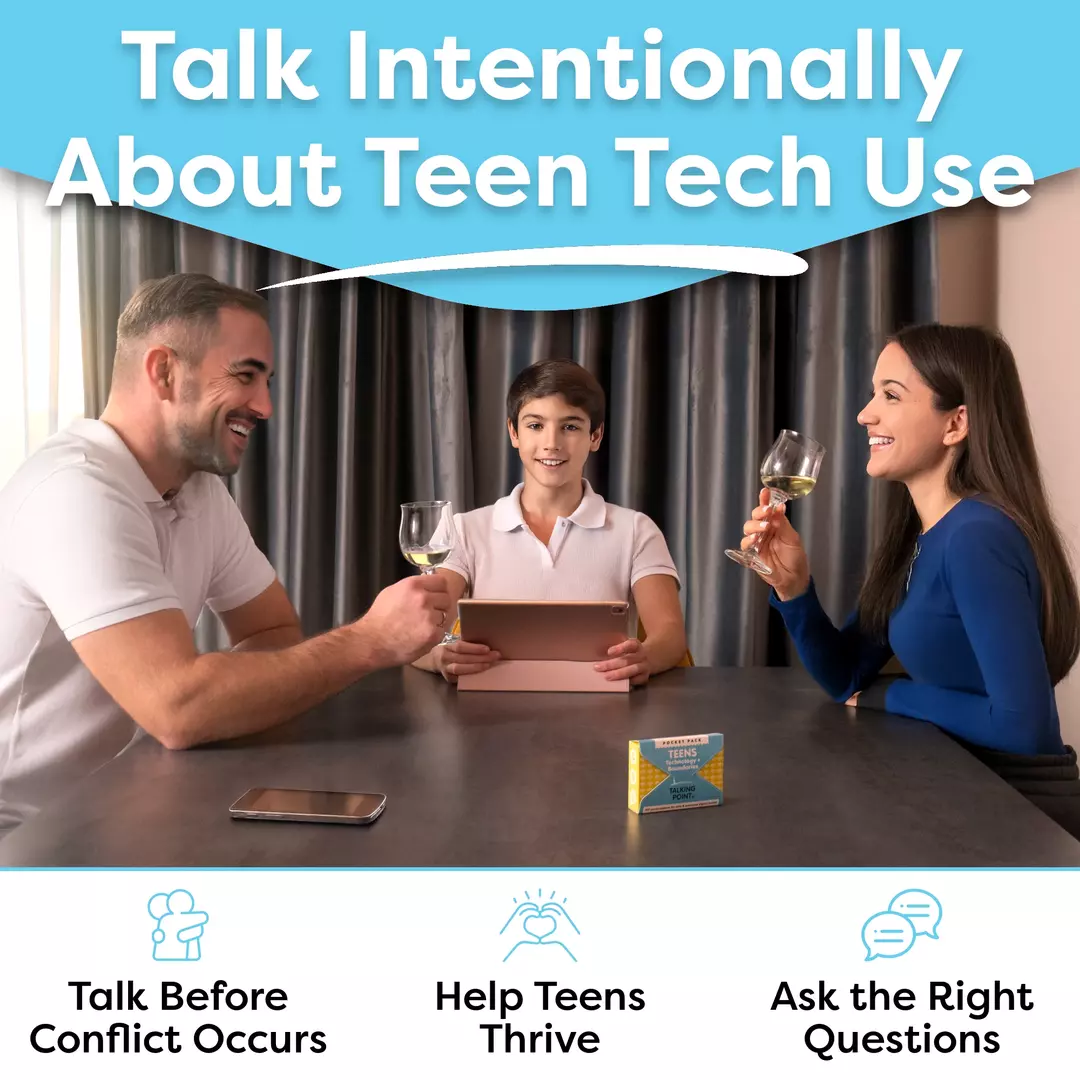



Technology + Boundaries Pack
195 expert-approved conversation starters across 7 critical categories
Durable, beautiful cards
FSC-certified sustainable materials. Built to last through years of conversations.
Compact, portable design
Fits in your pocket, purse, or glove compartment. Take it anywhere.
60-Day Money-Back Guarantee
If these cards don't help you connect with your teen, we'll refund your purchase. No questions asked.
Limited Time Offer!
ADD TEENS: LOVE + BOUNDARIES AND SAVE 10%

10% OFF + FREE SHIPPING
Teen Safety Bundle
Technology is not the only difficult area to conquer when dealing with your teen. Which is why we're giving you the option to add TEENS: Love + Boundaries at a special bundle price.
Why add both?
Because your teen's online life and relationship life aren't separate - they're deeply connected.
Social media shapes how they see relationships.
Dating happens on screens.
Peer pressure shows up in group chats AND in person.
Together, these two packs give you 390+ prompts to navigate the two areas where teens need guidance most.
Plus: Adding both gets you FREE SHIPPING.
The Conversation That Changes Everything
Here's the truth:
Your teen is navigating a digital world that didn't exist when you were their age.
Online predators. Cyberbullying. Impossible beauty standards.
Algorithms designed to addict them. Content you can't unsee.
They're facing pressures you never had to face - and they're doing it largely alone.
Not because they don't need you.
But because these conversations are hard to start.

These cards make them easy.
They give you the confidence to ask the right questions.
They help your teen open up instead of shut down.
They keep you connected through the years when it's easiest to lose each other.
And they work.
Not because we say so - but because 65+ experts who dedicate their lives to parent-teen communication designed them specifically for this purpose.
Your Teen Needs You

They need your guidance. Your wisdom. Your willingness to listen without judgment.
But they won't come to you if the door isn't already open.
These cards open that door.
We have had so many parents leave reviews. Here's the common theme:
"I wish I'd had these years ago."
"Game changer."
"Every parent needs these."
"Ordered a second set."
"My teen actually opened up."
You're not the first parent to wonder if this will work.
But you might be the last one still wondering instead of using them.
Join 1,000,000+ families connecting with Talking Point