- United States (USD $)
 Best Sellers


 All products
 Shop by category


 Bundles
✦
Help me choose
Take the quiz [1 min.]
Bundles
✦
Help me choose
Take the quiz [1 min.]

Calming Evening Habits That Help Kids Share Their Feelings
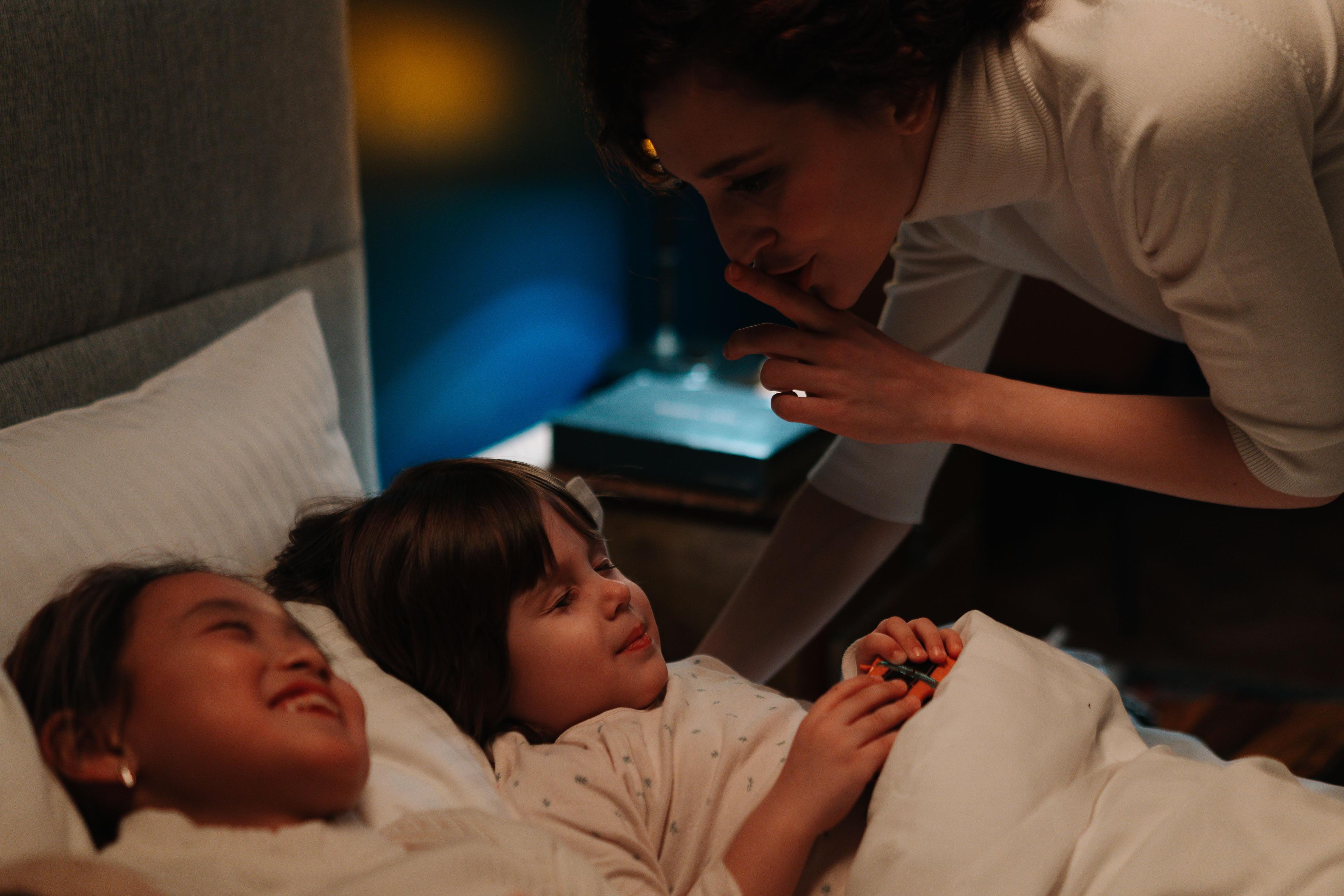
Turn the crazy bedtime battle into a peaceful time for your child to share their worries from the day.
>
>
TL;DR
-
End nighttime battles peacefully.
-
Help children process daily anxiety.
-
Replace screen time with connection.
-
Support deep emotional child growth.
What are calming bedtime questions to help my child share their feelings?
The most effective calming bedtime questions for kids are open-ended, non-judgmental prompts that invite emotional expression without feeling like an interrogation. Integrating these targeted nighttime routine questions into your evening transition lowers cortisol, builds psychological safety, and creates a secure space for children to process vulnerability. This intentional routine transforms potential evening anxiety into a soothing, deeply connected bonding experience right before toddler sleep.

Why Bedtime Feels Like a Battleground
The sun goes down, and suddenly your peaceful home transforms into a high-stakes negotiation zone filled with stall tactics, sudden requests for water, and unexplained emotional meltdowns.
For many parents, managing a chaotic evening can feel incredibly isolating, especially when you are running on empty yourself. When children resist turning off the lights, they often are not just testing boundaries; they are reacting to the built-up sensory overstimulation and unprocessed stress of their day.
Relying on digital screens to quiet the chaos frequently backfires, delaying deep toddler sleep and cutting off the exact moments when your little one needs your emotional attunement the most.
★★★★★ 1M+ happy customers
Our best conversation starters for romantic questions for couples

The Hidden Impact of Evening Stress
When a evening routine is consistently tense, it creates a negative feedback loop that damages both a child's emotional health and the parent-child bond. Unexpressed fears and daily worries do not just vanish; instead, they manifest as physical restlessness, frequent nighttime awakenings, or early morning behavior issues.
Over time, missing these critical moments of connection leaves kids without the essential tools to understand and regulate their big feelings. Without a dedicated space to empty their emotional backpacks, children carry daytime stress directly into their sleep patterns, leaving the entire household exhausted and disconnected.
Creating a Peaceful Sanctuary for Connection
Forming a gentle, predictable routine right before sleep provides the ultimate psychological anchor for a developing mind. By stepping into a space of radical empathy and recognizing how heavy a child’s daily world can feel, you can seamlessly establish a soothing environment where walls naturally come down. Shifting your focus from strict time enforcement to gentle, open-ended curiosity completely changes the atmosphere of the room. This low-friction transition allows you to easily learn without any pressure or lecturing.
From Bedtime Chaos to Complete Calm
"We used to dread the evening routine because it felt like a constant power struggle from dinner until lights out. Using these targeted questions completely changed our nights, letting my daughter open up about her school worries so she could finally drift off to sleep peacefully."
Lindsey P
A Breakthrough for My Quiet Son
"My youngest always holds his emotions inside, which used to turn into massive meltdowns right at bedtime. This gentle approach gave us a perfect, low-pressure way to connect, and he now looks forward to sharing his true feelings every single night."
Wendy N

Bring Peace to Your Evenings Tonight
You do not have to endure another evening of exhaustion, bedtime delays, and emotional disconnect. By introducing intentional, calming prompts into your nightly rhythm, you can actively protect your child's emotional well-being while restoring peace to your entire home. Make tonight the night you stop managing the chaos and start cultivating deep, lasting connection.
Frequently asked questions
60-day hassle-free returns
Ready to give Talking Point Cards a try? We think you’ll love them, but if not, you’ve got 60 days to return them for free.