- United States (USD $)
 Best Sellers


 All products
 Shop by category


 Bundles
✦
Help me choose
Take the quiz [1 min.]
Bundles
✦
Help me choose
Take the quiz [1 min.]

Dorm Room Bonding Ideas for College Students to Make Friends Fast
Freshman year can be scary. Use these easy questions to break the ice with new roommates instantly.

>
>
TL;DR
-
Skip awkward silences with intentional roommate questions.
-
Build fast, screen-free community in your dorm.
-
Turn intimidating freshman anxiety into meaningful connection.
-
Spark genuine vulnerability without feeling forced.
What are good dorm room bonding ideas and college icebreakers?
The best dorm room bonding ideas focus on low-pressure, screen-free activities that encourage organic storytelling, such as group floor dinners or interactive card games. Effective college icebreakers bypass predictable small talk and surface-level introductory stats, substituting them with creative prompts that lower emotional defenses. This strategic approach transforms intimidating communal spaces into secure landing pads, allowing roommates to establish authentic trust and deep psychological safety within the crucial first week of the semester.

Overcoming the Freshman Connection Gap
Walking into a freshman dorm for the first time can feel entirely overwhelming. You are suddenly surrounded by hundreds of strangers, balancing academic pressure while trying to figure out where you fit in. Many students try to mask this social anxiety by retreating into their phones, but ignoring the social scene only deepens the sense of isolation. When you rely on standard, superficial interrogation questions like what your major is or where you grew up, you end up stuck in forgettable conversations that fail to build actual comfort. If you want to bypass the typical awkward friction of those initial move-in weeks, you need an approachable, structured tool designed to bring walls down naturally.
★★★★★ 1M+ happy customers
Our best conversation starters for romantic questions for couples

Escaping the Traps of Surface-Level Connection
The pressure to establish a solid friend group during the first semester can occasionally lead to intense social exhaustion or a feeling that you must perform a certain persona to be liked. When early interactions stay entirely on the surface, roommates often end up living together like polite strangers, completely missing out on deep household bonding.
This lack of genuine safety at home can intensify seasonal homesickness and make an unfamiliar campus feel even bigger and more isolating than it actually is.
Shifting from Social Performance to Shared Comfort
To break that cycle, you simply need to introduce a low-friction activity that encourages shared laughter and structured vulnerability. Sitting on the floor with a few snacks and a deck of intentional, psychologically grounded prompts creates a shared experience where no one has to worry about coming up with the perfect thing to say next. It shifts the dynamic from a stressful social test into an engaging, memorable game night, laying down a real psychological foundation for lasting loyalty.
From Awkward Silence to Best Friends
"Our room was completely silent on move-in night until someone pulled out these cards. Within an hour, we were laughing about old high school memories and completely forgot to look at our phones."
Vera P., Ohio State University
The Ultimate Floor Icebreaker
"I used these prompts during our first floor meeting in the residence hall. It completely broke the tension and helped the quiet kids on our hall open up without feeling singled out."
Jenna G., Resident Assistant, UT Austin
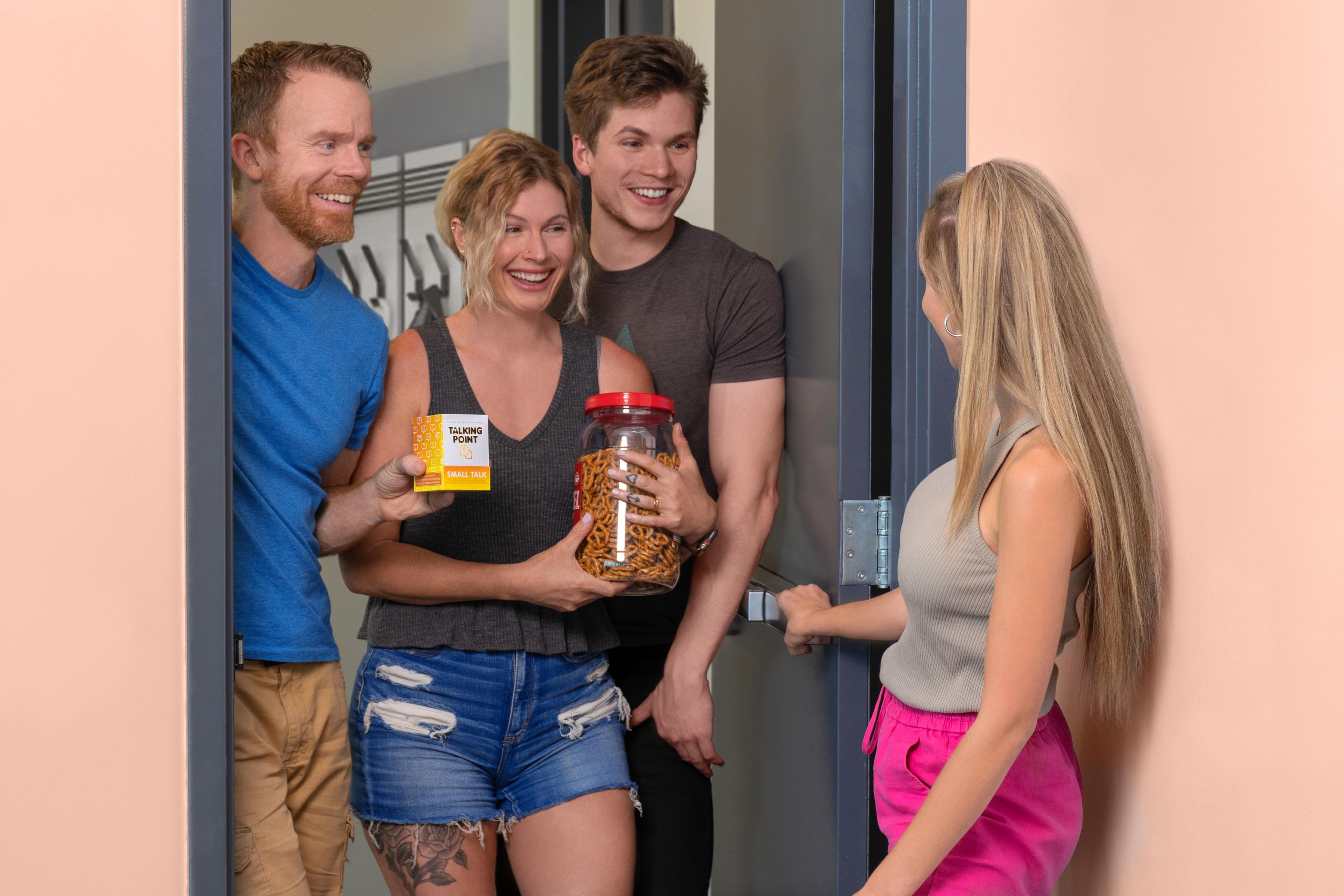
Take the Stress Out of Move-In Week
You do not have to navigate the transition to campus life alone or spend your first semester stuck in exhausting, superficial conversations. Bring the ultimate social hack to your residence hall and transform your dorm room into the central hub for authentic, lifelong friendships on your floor.
Frequently asked questions
60-day hassle-free returns
Ready to give Talking Point Cards a try? We think you’ll love them, but if not, you’ve got 60 days to return them for free.