- United States (USD $)
 Best Sellers


 All products
 Shop by category


 Bundles
✦
Help me choose
Take the quiz [1 min.]
Bundles
✦
Help me choose
Take the quiz [1 min.]

How to Rebuild Trust and Repair Your Relationship with Your Teen
Step-by-step ways to talk, heal emotional hurts, forgive past mistakes, and build a loving connection again.

>
>
TL;DR
-
Acknowledge mistakes openly: Validate their emotional experience.
-
Listen without interrupting: Give them physical space.
-
Consistency repairs fractures: Small daily habits matter.
-
Rebuild through micro-connections: Keep interactions low-pressure.
How can I rebuild trust and repair my relationship with my teenager?
Rebuilding trust with your teenager requires consistent, non-defensive emotional availability and a willingness to validate their personal experiences without offering immediate correction. Parents can repair a fractured bond by shifting from a managerial role to an empathetic listener, ensuring that everyday interactions feel safe and free from lectures. Over time, prioritizing active listening and respecting behavioral boundaries transforms adolescent resentment into mutual respect and a secure emotional connection.

Overcoming the Silence: Steps to Healing
The distance between you and your adolescent can feel like an overnight shift, transforming a once-vocal child into a stranger who retreats behind closed doors. When structural fractures occur after recurring arguments or broken promises, the natural instinct for many parents is to push harder for answers, which inadvertently drives the teen further into isolation. This protective wall is often a defense mechanism against feeling misunderstood or prematurely judged.
Without a deliberate pivot in how you approach daily communication, this protective silence can harden into chronic emotional detachment that follows them into adulthood.
★★★★★ 1M+ happy customers
Our best conversation starters for long distance

The Cost of Unresolved Conflict
If your household has fallen into these tense, defensive patterns, it is easy to feel entirely helpless. When every attempt at a meaningful conversation devolves into eye-rolling or brief, defensive answers, parents frequently give up out of pure exhaustion, leaving the underlying hurts completely unaddressed. This ongoing impasse creates a highly stressful environment where both parties feel entirely isolated under the same roof. To break this cycle, you must introduce low-friction, structured tools that strip away the intense pressure of face-to-face vulnerability, allowing you to gradually introduce questions for teenagers to get past one-word answers without triggering their natural defenses.
Creating a Safe Space to Connect
When an adolescent feels constantly monitored or criticized, they stop viewing their parents as a source of safety and instead see them as an emotional adversary. The long-term cost of leaving this relational gap unheeded extends far beyond quiet dinner tables; it directly shapes how your child handles conflict, sets boundaries, and experiences vulnerability in their future adult relationships. To break down these walls, a parent must courageously model the exact vulnerability they wish to see, offering a sincere apology for past defensive reactions without demanding an immediate shift in the teen's attitude. By practicing non-judgmental listening and learning how to ask kids about anxiety and mental health safely, you show them that their emotional world is fully respected.
A Lifeline for Our Family
"After months of tense silence following a major family argument, this deck gave us a structured way to sit together without fighting. It completely removed the awkward pressure."
Mark P
Real Healing Without the Lectures
"My daughter usually shuts down the second I ask about her life, but these prompts felt safe enough for her to actually share her frustrations with me honestly."
Jered C
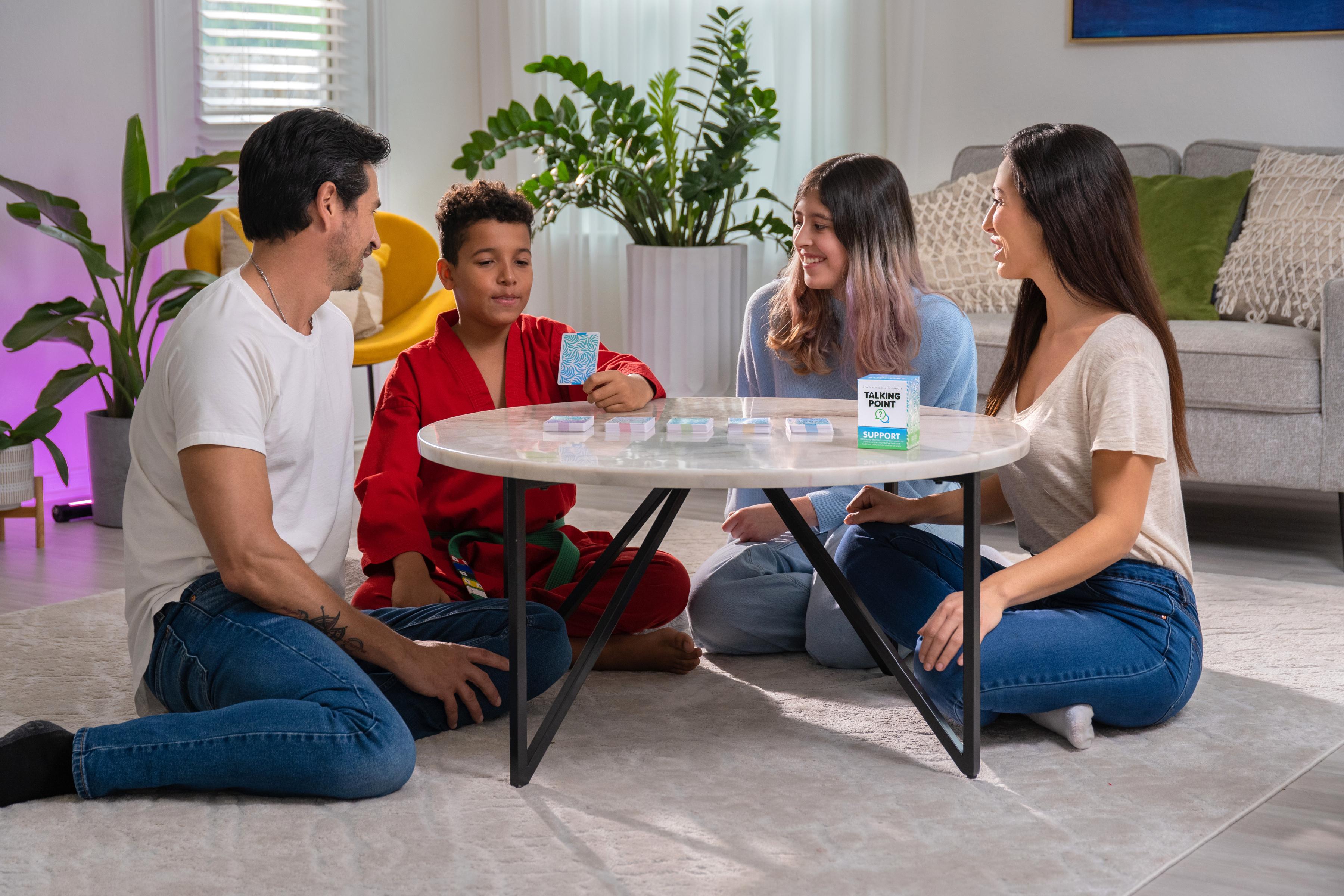
Take the First Step Toward Healing Today
You do not have to wait for your teenager to outgrow their distance or magically decide to open up to you again. By integrating intentional, psychological prompts into your weekly routine, you actively replace defensive posturing with a steady rhythm of mutual empathy and calm communication.
Bring the Support Deck Home. Invest in your relationship today and discover how simple, non-threatening questions can dissolve months of accumulated tension, transforming your home back into a sanctuary of genuine emotional connection.
Frequently asked questions
60-day hassle-free returns
Ready to give Talking Point Cards a try? We think you’ll love them, but if not, you’ve got 60 days to return them for free.