- United States (USD $)
 Best Sellers


 All products
 Shop by category


 Bundles
✦
Help me choose
Take the quiz [1 min.]
Bundles
✦
Help me choose
Take the quiz [1 min.]

EPISODE 01
33 min.
When couples start drifting apart

Sarah Branigan
Individual & Couples Therapist
Licensed Marriage and Family Therapist
Connecticut, USA
Sarah Branigan
Individual & Couples Therapist
Licensed Marriage & Family Therapist
Connecticut, USA
Sarah helps couples strengthen connection, improve communication, and work through relationship challenges using a collaborative, strength-based approach.
Her focus areas include pre-marital counselling, infidelity recovery, life transitions, divorce, co-parenting, and preventative relationship support.
Her qualifications include:
· Master of Marriage & Family Therapy
· Licensed Marriage and Family Therapist
WHAT YOU'LL DISCOVER
Four ideas that can change a relationship
Why relationship drift happens - even to couples who genuinely love each other.
Why "we're fine" can be a protective phase that hides something deeper
How curiosity rebuilds connection faster than fixing or problem-solving.
Three practical tools couples can use this week - no big conversations required.
"Fine can be a very protective behavior that keeps us safe. I often get curious about what we might be protecting or avoiding feeling underneath that word."
SARAH BRANIGAN
LICENCED MARRIAGE & FAMILY THERAPIST
PRACTICAL TOOLS FROM THE CONVERSATIONS
Three small tools. One complete rhythm.
The L.I.T Tool
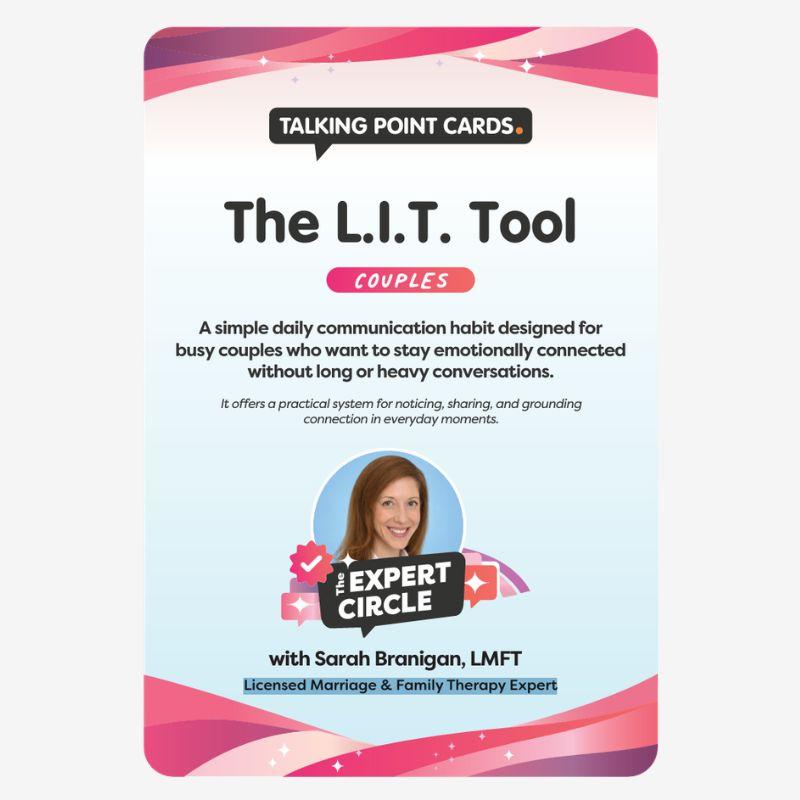
A 3-step check-in for moments when something is off. Support reconnection in under 10 minutes.
The Safe Reset
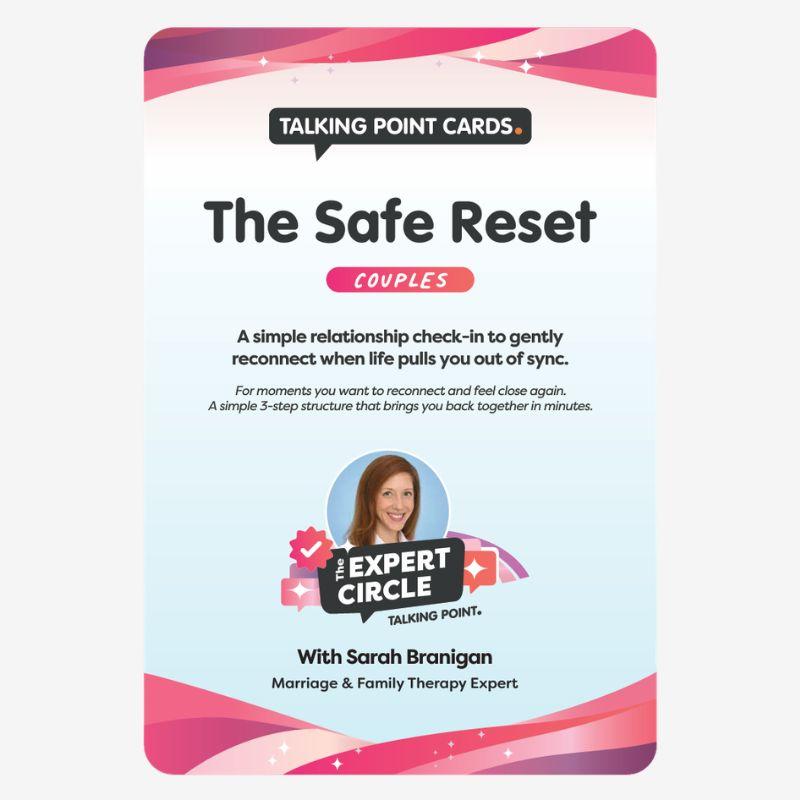
A micro daily habit: Look. Invite. Touch. A five-minute practice for everyday closeness.
Curiosity & Playfulness
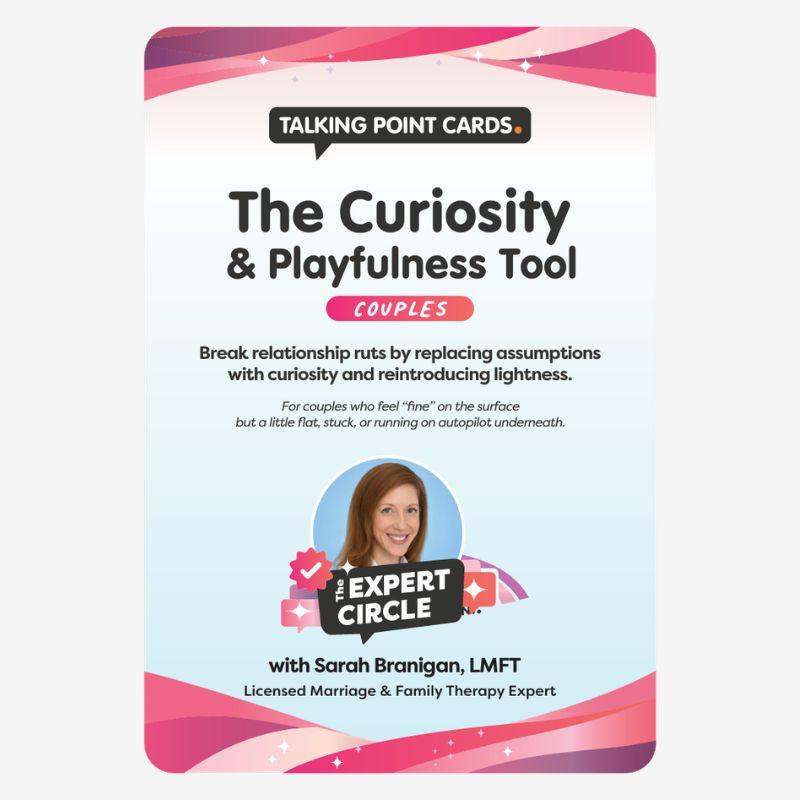
A four-week guide for couples who feel stuck. Bring lightness and curiosity back into connection.
Buy the bundle
-
BEN JONES
Sarah, thank you so much for being here. I'm really looking forward to this conversation with you. But before we dive into it, could you introduce yourself and share a bit about your background?
SARAH BRANIGAN
Thank you for having me. I'm really excited to be here for this conversation today. I am a licensed marriage and family therapist based in the United States. I really work exclusively in the relationship world. So I'm working with couples who are navigating every kind of stage of their relationship, brand new through people who've been together for decades and are navigating all kinds of different challenges and experiences. I also work with individuals who are having relational challenges.
If a partner isn't really interested in participating, we kind of examine the ways in which we can support the relationship from one end of it. So, so much of my work is really just rooted in relationships.
BEN JONES
That sounds great. And I'm sure that a lot of people will be very interested to hear what you have to say and answer a couple of questions in this in this meeting. So at Talking Point Cards, we connect with a lot of couples from all over the world. And as part of that, we get a lot of feedback from them. One of the things we hear consistently is that nothing is wrong, but something doesn't feel quite right. They care about each other, they're functioning, but the closeness that they once had feels more distant and often they can't point to a moment when it changed. That's a pretty relatable experience, I think, for most couples. So from your experience, what are some of the common ways that contribute to couples slowly drifting apart and losing that intimate connection they used to have?
SARAH BRANIGAN
I want to start by normalizing this. I think so often when this experience happens for couples, I think they're alone on this island and there's a loneliness to that, right? But this is something that's so prevalent in so many relationships. And there's so many things that really contribute to the way connection starts to slowly fade. Busyness is a big one. In stages of life, we have ebbs and flows with the things that are happening in our lives.
We have jobs, we have children, we have family members, we have all kinds of things that contribute to the big picture of life. And sometimes our relationship can take a back seat, right? We have this really deep sense of trust and belief that, well, my relationship will be fine, right? And so that's when we get to the point where it's fine, but people are sensing that discomfort around fine really not being enough. So we're looking at not only the busyness, we're also looking at discomfort.
When we get to a place where we're feeling like something's not right, nobody wants to be uncomfortable, but sometimes talking about it feels more uncomfortable. And so when we start to watch the connection fade, sometimes the silence creates more disconnection. That sense of not wanting to rock the boat, well, maybe fine is good enough, right? That can really contribute to a growing sense of disconnection.
Growing individually without growing together, right? So I always kind of reference this idea that we have our individual growth pillars and our couple pillar. And when our individual growth pillars are progressing, right? We're doing things that are helping to nurture us and grow us. The hope is that that'll help facilitate growth or connection in the relationship. But sometimes that's not the case, right? One partner might be growing and they're not necessarily pulling their partner in. And so this is something that can really cause disconnection and separation. Ignoring bids when one person is leaning in and one person is not noticing the bid, right? That can kind of create a sense of disconnection, resentment, even, and that pushes people back. Assumption, this is a big one. And I'll probably talk about this a lot over the course of our conversation.
But often in relationships, we get to this point where there's this absence of curiosity and it leads to this assumption. And as humans, when we aren't exercising curiosity, we miss so much of what's happening. And so the presence of assumption in relationships without asking the questions, without being curious can really create a lot of disconnection and it's right in relationship.
BEN JONES
That's really insightful. So there's definitely multiple parts that you've highlighted in there. So from what I got from that, things that jumped out to me were things like normalizing the less than optimal state, the loneliness in the relationship that people can feel when that happens, and just that whole compounding process of stepping down and stepping back and just accepting it until it all gets a So why do you think that couples don't notice that long-term drift until it's a really big problem?
SARAH BRANIGAN
Generally happens slowly over time. I always like to kind of use the example of children, right? We have our children and we see them growing every day, but we don't necessarily notice how much they grow because the changes are small over time, right? And all of a sudden, someone goes, wow, that kid is so big. They've grown so much. Something similar happens in relationships, but it doesn't necessarily feel as good, right?
When we are having these really small shifts in the way we function in a relationship compound over time, we don't necessarily realize it because they're small. And when we're not attending to the small things, they grow. And so often we're way down the line before we realize how much change has actually happened in the relationship, especially if we're an autopilot.
We kind of, in relationships, there are especially ones where we've created a sense of stability and emotional safety. We say, we're fine. We're fine. We don't need to attend to it. We're good. And often that in itself, we don't continue to revisit. We don't continue to check in. And those check-ins are a huge part of what maintains connection in relationships.
BEN JONES
Yeah, I can understand that. That really does sort of justify that feeling of vine in a relationship where it's fine on the surface. Life is busy. There's routines, there's schedules and everyone's sort of just fucking along. But under the surface, emotionally, something does feel like it's flatter or there's a bit of disconnected there. So when couples come to you and say that everything's fine, but they're actually not really deeply connected, how would you describe what's usually going underneath the surface that is causing the root of that disconnect?
SARAH BRANIGAN
So there can be several things that are happening at a point in the relationship where there's a rut. I often go to the idea that the presence of fineness is really the absence of emotion. We've separated ourselves from whatever emotional experience is happening. And so we're, I'm okay, I'm fine, right? Fine can be a very protective behavior that keeps us safe. So that's one of the first things I often go to.
I become really curious in relationships if we're fine, right? What are we protecting? What are we maybe trying not to feel? Another thing that really happens a lot in relationships is the absence of language. We as humans are, we experience what we know based on what we learn, right? We only know what we've been exposed to, in other words. And so if we never really learned language around emotional communication or connection, we may not have the tools we need when we feel something that we need to talk about, and we may not have the language. And so sometimes it's the absence of the tools or skills to communicate when something comes up, and it's easier to really just kind of push to the side.
Unspoken relationship rules are also a big one. They're, without realizing it, we establish these rules and roles in our relationships, and they help
make us function, they keep us stable. But sometimes those roles and the rules prevent us from doing the thing we need to do to connect, right? One of the rules as an example could be, well, we don't rock the boat, we don't lean into conflict. And if I think this thing is going to create conflict, well, the rule in the relationship is I don't do it, right? So all of these different components come in when we're examining, well, what does fine really mean?
BEN JONES
So for couples who are doing fine, but they do feel that sort of quiet drift that's setting in, what's a simple and fast process that you would recommend to proactively build connection? Something that, you know, a busy couple could do in less than 10 minutes a day, so that they're addressing problems before they turn into some big thing that needs a heavy talk that they'd be putting off.
SARAH BRANIGAN
There's a lot of language that we can kind of attach to this, but I always like to just name the idea of check-ins, right? As humans, we are trying to figure out how can we fit something in a small amount of time. And sometimes the idea of something big and daunting is too much, right?
So I think about, there's this tool called the Safe Reset, right? And so we start with a signal. We want a name for our partner. This isn't a big thing. This isn't going to be a big to-do, but like, can we lean into a conversation for a second, right? And this language can be whatever it wants. I always remind my clients, make the language yours because you don't want to go home and sound like Sarah and then be like, well, why is Sarah in our relationship all of a sudden, right? So language like, this isn't a big thing, but can we do a quick check-in? Can we do a big reset, or can we do a quick reset?
I don't need to talk about anything heavy. I just need you to listen, right? And that's quick. That's like 30 seconds. We lay that groundwork. And it also reminds the person on the other end, right, to check in with their nervous system, right? It's okay. There's no emergency. There's nothing that needs to kick you into fight or flight right now.
The next part is a tune, right? So we're looking at picking one inner thing that we want to share. One thing that stuck with me today after we do this check-in, right? Here's the thing. We named the thing. And then we go to one thing that stuck with me. Right now, I'm feeling something that I enjoyed about this. And what this does is it allows for that sense of vulnerability. Part of what happens when we're disconnected is we're not showing up
with that sense of vulnerability. So it tests the waters, right? It's not this big emotional dump, but it's this thing that says, here's just this one thing I want to name and I want to see what happens, right? So the rest of this process is really about what happens on the other end of it.
We're not asking anything of our partner, right? We're just asking them to hold space and listen. Hold space is such a therapeutic term, but really what we want is to be able to sit and listen and not problem solve for us. And so when we recognize that our partner has the capacity to do that, it really can help strengthen connection. It restores emotional contact. It helps to kind of recalibrate the way in which we view the relationship.
BEN JONES
I love that idea of the check-ins and that safe reset process because it really does directly tap on those points you brought up earlier about the absence of emotion, language, and unspoken rules being part of the foundation of gentle drift within relationships. And having that check-in process would really help that, I can imagine, especially before it gets to a big problem and something that couples can do very regularly. Do you have any tools or suggestions about resources that you recommend to customers or clients or just say, you know, check out this, this might be able to help in this process?
SARAH BRANIGAN
So I love cards. I love question cards. A lot of times we go back to this statement about not necessarily having the language, right? And when we're facilitating connection and conversation and we don't have the language, things like talking point cards are great because they give us the language when we don't know where to go. We want to do this thing. I want to do this check-in, but I don't know what to check in on. I don't know how to get there. And so I love card decks like talking point because they really allow us to take the resource and it's the lead-in for us, which also eliminates a little bit of the stress.
BEN JONES
Perfect. That is one thing that we've actually noticed customers saying. It takes the decision making. It takes the stress. It takes the worry out of having those conversations. And one thing that I personally like is it actually takes the blame out of them because if you ask a question and the question goes badly or it doesn't land right, you just say, hey, it wasn't me. It was the cards. Don't worry about it. Let's just pick another one and go try again. So it's a great way to deflect and keep things light while also actually going deep and having that diversity of conversation.
SARAH BRANIGAN
I think one of the things that's also important with that, right, if we can use that as a deflection, it can create a moment of playfulness, which I think is another thing that is really important in relationships. And we can certainly dive into that a little bit more, but the way that the cards facilitate connection and they also facilitate these other pieces of interfacing that we need, I think is really great.
BEN JONES
Right. Let's just push on that a bit more. When you say they bring up a sense of playfulness or other aspects of relational dynamics, could you go into that a bit more?
SARAH BRANIGAN
Yeah, sure. So one of the things that I think about when I think about people, couples being in ruts is the idea that there's not only the absence of connection, but there's the absence of lightness in the relationship. Playfulness is a really important part of connecting. We think about the way we interface and have relationships with our friends and why are we connected to our friends because there's joy that comes from that experience. And that is a really important part of romantic relationships too. I think integrating playfulness is one of the really key factors in reestablishing connection when a rut exists.
BEN JONES
That's really helpful. Now, just talking about being in a rut. So obviously being in a rut is fairly prevalent in sort of established relationships, particularly when there's kids and routines and work and dishes and lawns to be mowed and all the stuff of life. From a therapeutic perspective, what is a relationship rut really made of? And why is it so hard for couples to sort of jump themselves out of it without being intentional about it?
SARAH BRANIGAN
Ruts are behavior patterns and our brains as humans thrive off of pattern and structure. Routine and habit is really, really hard to change. And so when we identify or settle in to this sense of safety that is a pattern, there is kind of feel really hard to connect to in our brains, but there's a sense of comfort even when the rut exists. One of the first things is noticing that and identifying when there's a pattern. We also want to think about the way in which the rut is protecting us. Every behavior serves a purpose. And so ruts can be protective. And I think about the idea, I often talk about the concept of pseudo
safety. Our brains do this thing where they say we're safer if we behave this way.
And even if it's not true. In ruts, I think in some instances, not all, but in some instances can really be a byproduct of that. There can be this behavior that's trying to protect something. And often the idea of saying something outside of what is deemed safe will challenge the homeostasis, the stability of the relationship. Ruts can often be built as a piece of what I was just saying. They can also be built out of nervous system regulation.
When we are in relationship with somebody, we want to make them feel good. If somebody else, if our partner doesn't feel good, it often makes us feel uncomfortable. And so we do this work to try to co-regulate. And often we lose something greater in that, which is the depth of emotion, the excitement, the vulnerability, because we're trying to maintain this calm and peace in the relationship. But again, so much of it circles back to this sense of safety and predictability. We lean into the rut and the routine of it all, and we think, okay, well, this is safe. I know this. Even if it doesn't feel good, I know it. And so it's so much of what ruts are built out of is really that.
BEN JONES
That safety in routine, that comfort. Yeah. And I think that that speaks to a lot of the reasons why often couples don't want a big relationship reset. They don't want to shake things up. They know that there's some foundation of love and trust there, but they've just had, they've slipped into a routine. They've slipped into a rut and it often doesn't need or they don't want this big shake up. They just need little tweaks to jump them out of that. As you were saying, what are some small but meaningful shifts that couples can make to help them do that? Some actionable things.
SARAH BRANIGAN
I want to start by saying that I think small is the key thing here. I think so often the thought of making changes in our relationship can feel really daunting. And the truth of the matter is that just like the change that got a couple to where they might be in a rut happened being with small, we
need that same small progression to get back.
So I always encourage people to really remember that creating change in the relationship requires lots of small building blocks and it's a marathon. It's not a sprint. So I always encourage, right, we don't want to exhaust ourselves at the start and kind of be out before we're in. I always start by naming the importance of recognizing the pattern. If we don't know what we're trying to change, it's really hard to change it. So stepping back and saying, well, what keeps us here?
Is it the routine of the evening? And we haven't carved in time for ourselves as a couple. It really, there's the curiosity piece of this that comes back in examining the pattern and sharing that. I'm noticing that this happens and this creates this. I'm noticing that we haven't dedicated enough time to each other. And I think this is a piece of this, right? There's a lot more examples, but we'll use that one. Then we move to this idea of really kind of like low risk vulnerability. The idea of vulnerability can be really uncomfortable.
And so we're not asking everyone to kind of throw their hearts on the ground in front and like spill everything, right? But the little tidbits, right? The sharing of something, oh, I'm going to, I'm going to disclose a little something that maybe I wouldn't have before, right? And the naming of the feeling, your partner says something, they maybe take that little extra initiative to lean in, right? And naming that the idea of being seen and heard as humans is so just crucial to our sense of peace and our emotional wellbeing. And for us to say something in our partner to say, yeah, I hear that. I understand it. I I'm sorry. That's your experience, whatever it is that can be really, really important.
The other thing that I think about is novel emotional experience. And this is really kind of where we go back to playfulness in some ways, but again, our brains attach so much to habits. And in order to disrupt that, we need to disrupt the way of thinking about things. We need to disrupt the way we do it. So if we have this relationship where there's not a lot of laughter or joy, maybe it starts with sharing something that you've seen on Instagram with your
partner. Oh, this thing was funny, right?
Then we have this connection point. And this is how we build the way in which we connect, right? Maybe it's you're going through the motion in the kitchen at night and you and your partner each have a role and you never touch. So maybe it's just walking by your partner, physical touch, hand on a piece of their body to acknowledge, right? Really minor, but can shake up, feels like a pattern. So all of these really small shifts in the way we interact, they don't have to be big, but they compound, they add on to each other over time.
BEN JONES
That's really interesting. When you were speaking, it struck me that couples often feel uncomfortable, even in those little disclosures, which shake things up and create those moments of closeness and comfort. At least I know for myself, there have been times where I've been like, oh, this is a bit uncomfortable to talk about. Even with my wife, who I've been with for a long time, 15, 16, long enough, long enough to not be comfortable with these things. Irrespective of the tools, just thinking about your sort of professional experience in this realm, how do you help couples find words to express concepts or ideas that they're not actually comfortable with? How do you get them to break that first barrier?
SARAH BRANIGAN
I think it's exposure to new words, right? I think that feels like kind of a complex statement, but I go back to, we don't know what we don't know until we know it, right? We don't necessarily have the language until we have the language, right? And so I go back to tools like cards, like talking point cards and language is here for you, right? We ask the question and the questions often contain these pieces of language that help facilitate conversation that maybe we wouldn't use in everyday life, right? And that's how we expand. It's how we expand our capacity to communicate by accessing new information and new language.
BEN JONES
So it's the prompting mechanism of whatever tool it is that is creating those new things to talk about, which then creates those fresh connections and conversation points. Now, you mentioned before that when couples are in a rut, fun and playfulness, often one of the casualties that sort of get left to the side as their relationship moves through into routine and logistics. Now, over time, that loss of fun can really make a relationship heavy and emotionally distant, even when there's still a lot of love in there. Where would you encourage couples to start if they were to bring back more fun into their relationship?
SARAH BRANIGAN
I mean, you go back to start small, right? Set the bar low. We don't want our expectation of integrating more lightness or playfulness to be this big thing that could fall flat. So when I say set the bar low, I don't mean don't set yourself up for success. But what I mean is allow the little things to be the wins. Often we think that something has to be really big to be impactful.
And I think about the fact that when we make space for something like this to be impactful, it can be. So that being said, I think about first going to what we know, right? For couples who have been in a relationship for a long time, there was something that brought you together. There was something that made you say, I like this person. I feel connected to this person. I enjoy my time with this person.
In fairness, I think it's important to acknowledge as we grow and change in relationships, we're never the same version of who we were. But this is always a good place to start in terms of information. What do we know about what used to bring us joy and connection? And if that's not accessible, is there a variation of that that feels good? Think about the idea that in this experience, we don't want fun or lightheartedness to be a goal we have to achieve. We want it to be the experience, right?
This concept of like, let the journey be what the experience is. Similarly, let the fun just be the fun. Don't let it be something, oh, it checked off the list. We had that fun moment. Good for us, right? We don't want that. We want to feel it because when we feel something, that allows us to connect to it on a deeper level. The other thing is if you don't have a long list of things you used to do or things you know work, trial and error. There's even kind of laughter and lightheartedness in failing and getting it wrong. There's something about bonding and like, oh, this one didn't work for us. Darn, right? Let's keep trying. So I think it's about making space for lightness to be a lot of things.
BEN JONES
How would you recommend couples go about doing that in a way that feels safe and natural and not forced or artificial?
SARAH BRANIGAN
I think a lot of what happens when we think about either leaning into an experience and emotionally feeling it or leaning away from it is really checking in with our central nervous system. Feeling what our body is really saying to us and then recognizing how we respond to it. So when I think about leaning into ways to integrate lightness and playfulness that feel natural and safe, number one, I always say check in with your body. What do you feel when this thing happens? Sometimes it's in our heart space. Sometimes it's in our hands. Sometimes it's in our stomachs. Sometimes it's this energy that like builds in a way that either makes us want to retreat or lean in. Allow the moments to be what they are. And instead of trying to examine them. So often we're so hypercritical when we're trying to make change happen. We're so critical of the efficacy of something.
And in reality, sometimes just letting something be can grow. So sometimes I use the example of the wiggly puppy. Like what happens when we hold on to a puppy too tight? Usually they wiggle and they want to jump out. When we soften around the puppy, sometimes the puppy snuggles in. And I think it's the same thing with lightness and playfulness. We don't have a stranglehold on trying to make it happen. If we kind of soften around it, often things feel more natural and safe. As part of that, I also think about allowing things to show up as they are.
I don't feel the need to force something. We can kind of take experiences as they show up and lean into the lightness of them. I know not every couple has children. But as an example, I think about the idea that when kids are little, they say things that sometimes just are so hard to let go of. And that can become a joke in couples, right? I think about the running joke of the way that my child used to say one thing, right?
So taking the experiences that are in front of you, the opportunities that are in front of you, instead of feeling like you have to orchestrate something, leaning into the awkwardness of it. Awkwardness can be okay. Hey, at least we're both uncomfortable together, right? There's something bonding about being uncomfortable together. Other helpful, important things, don't let your relationship or your partner be part of the joke. That can feel really forced.
It can feel really artificial, and it can really create more disconnection. So stay away from those uncomfortable things. But in general, let fun be unexpected. Don't force it. Don't make it, you know, it's this time. We got to have our fun right now. Let it show up as it shows up and kind of make space for it.
BEN JONES
Yeah, just take the opportunities as they come.
SARAH BRANIGAN
Yeah.
BEN JONES
Many couples want more depth in their relationship, more meaningful connection. But when they think about that, a concern that going deeper means more serious talks, more emotional vulnerability, too much, too much. It's just a bit too scary. And they don't want necessarily to open that can of worms, so to speak. Well, they don't know how to handle that process of exposing themselves emotionally to their partner. And so instead of embracing it, they avoid going deeper altogether just to protect themselves. What can couples do to create deeper, more meaningful connections without all those
conversations feeling heavy or too serious?
SARAH BRANIGAN
Oh, I'm going to be the broken record on curiosity. But this is where I go back to. I think curiosity is a fundamental element of connection. And curiosity doesn't necessarily need to be this deep digging, intense thing. One of the beautiful things about curiosity is that it really still gives the person on the other end of the curiosity agency. We can ask questions and they have the agency to respond in whatever way feels right and good.
So I think about leaning in to that curiosity. And again, I'm going to reference the cards. Again, those talking point cards facilitate that in such a great way. They are the building block. Curiosity. Here's a question. Let's start here. So I think about curiosity being such an important piece of how we connect. I go back to the other idea of keeping it small, keeping it sweet and short and sweet.
We don't want interaction and meaningful conversation to feel like this albatross that we have to slug and dredge through. So when we're keeping this effort to connect at the forefront, how do we keep it short and sweet? How do we recognize where our boundary is around the depth and the heaviness of it and kind of acknowledge them, right? Oh, this is where I need to go today. I don't know that I can take it any deeper. Letting the other person into your experience.
When we're having an experience, our sensory experience is huge. Again, going back to our nervous system. Oh, my heart's beating a little bit right now. I wonder what that means. There's a vulnerability in that. And we don't need to go too deep. We can just put that out there. Let it be what it is. Let the vulnerability exist for a second. Invite our partner in. That can be a piece of it. I also think about the importance of being okay with not knowing, whatever that means.
When we share something, whether you're the speaker or the responder, this just experience of putting it out there and letting it be witnessed, whether or not we know how to respond. I'm not saying that. I don't know how to meet you there. Can I sit here and acknowledge that that sounds really challenging? If we put the pressure of knowing on, that can really create this intensity and this heaviness to it. And then balancing lightness and heaviness. In order to create connection, there's a sense of heaviness that we need. Balancing it with lightness can often facilitate conversations that don't get really, really weighted down.
BEN JONES
That's really quite insightful, actually. That concept of the little things, the light things, the easy things, just stacking habits on habits and also being willing to name when you just don't know the answer and when you just don't know. So you can just be together conversationally as opposed to trying to force an answer which might not be right. That's really an interesting concept. Right. So we've talked about drifting. We've talked about ruts. We've talked about relationships sort of falling into, I guess, a bit of flatness. We've talked about fun and bringing playfulness back and keeping that spontaneity
alive. And one thing that strikes me is that in all those things, it seems to be that conversation and connection through talking seems to be sort of a fundamental baseline expectations within those relationships. So based on your experience then, what are the most important communication habits that couples can practice to set themselves up for the long term?
SARAH BRANIGAN
I think there's several. Bids for connection are an important piece, right? A bid looks like the leaning in. It's the, I notice you, I see you. These communication bids to draw our partner in are important. Effort towards repair.
Repair when we've ruptured something in the relationship can be really hard, can be uncomfortable to communicate. And so often our inclination is, I'm going to avoid it. We're just going to let it drag out until it dies. And that's often one of the most challenging and harmful ways that we handle something that's been broken. So communication around repair, maintaining that commitment to repair is really big. Curiosity.
I can't say it enough. Curiosity instead of assumption. Reminding yourself not to place yourself as the expert of your partner. Letting your partner be the expert on themselves and allowing them to feed you that information through curiosity. And that doesn't necessarily look like what's your favorite ice cream every week, but it does look like curiosity, pieces of curiosity that facilitate information about our partner that we wouldn't necessarily know. Validation. Letting the person know that whatever their experience is, they're allowed to have. So naming, if your partner comes to you and says, you know, I'm feeling really frustrated by this thing. And then they share a story.
You're allowed to feel frustrated by that. I can understand why that's the case. So that element of being seen and using language around that. Validating their experiences. Yeah. Validating their experiences, getting in the discomfort of things not being resolved. Sometimes we can over communicate and it can actually cause more harm than good. Right. And it's a fine dance that we do.
We always want to be communicating, but we want to recognize when the communication can be too much or creating, doing more bad than good. So really being mindful of maybe recognizing where in communication, you've hit a point that says, I think we just need to let this be for right now. Right. We're just on the merry-go-round and we need to put it down for a little bit. Playfulness. Always going back to that, laughing at each other in a team way, right? Laughing at ourselves. Playfulness is a sign of safety. And then affirmation, right?
Those reminders. We're on the same team. I'm on your side. I understand this thing happened. I'm not upset with you. Those types of pieces of language to really reaffirm.
BEN JONES
Now, I think you've actually touched on this before, and particularly in that list that you just shared. But if you were teaching a time poor couple, a simple five to 10 minute communication system to help them stay close and connected that they could sort of slot into every day, what would that system include in terms of actionable components that people could take away today?
SARAH BRANIGAN
Okay. So the LIT tool is a great one. Look, invite, touch.
So one to two minutes, we start with look. And by that, what I mean is observation. I see you. Something I noticed about you today was, or I really appreciated the way that you handled this thing. Taking a moment to acknowledge something that you observed about your partner. It allows them to feel seen, understood, maybe, and if they didn't even realize that you were looking for them. Invite, come into my world.
So we share something, you know, it can be something you want to hear this random thing I heard at work today And it doesn't have to be anything big or grand or sweeping giving them a glimpse of something that we experienced today. That maybe traditionally we keep under lock and key invites them into this experience that allows for more connectedness. And then touch. I think physical touch in a relationship when it feels safe can be really really important. And that might just look like sitting close to each other. It might look like a hand on an arm or a leg. It might just look like eye contact. But that sense of physical connection to ground us in their relationship. So these three pieces a minute or two on each thing can be really important in maintaining, establishing, re-establishing connection over time.
BEN JONES
So would that process, that that little three-step process, would that be from one person to another or would it be, I do the first part, you do the first part. I do the second part, you do the second part, or is it you know, you take your three and then you take your three? How does that work in in a couple where you've got that dialogue going and where you both want to you know, rreceive as well as give?
SARAH BRANIGAN
So when we I think about the natural organic piece of it, if it feels kind of more natural as a couple to kind of attend to the look piece of it, then we do that part. I think one of the most important things in relationship is building our own normal, And so if we have this framework that says all right, but here's the ICU piece, here's the come into my world piece, here's the grounding piece, right? I think ultimately the first two are a little interchangeable and it's at your discretion to say, you know, this feels better. We talk about this piece first and then we move on to this piece. The grounding traditionally is kind of a good way to leave the conversation and connection. But it also gives the couple agency right to decide which way you want to do it. It gives them the reminder that we get to build this. We get to build what feels good for us together. I also think that's a really important thing to remember in relationships.
BEN JONES
Well, we've covered a lot in this conversation from relationship issues, to ruts, to breaking out of our routines, establishing communication, All this really important stuff for couples of really all stages from dating to married to young kids to old kids to long-time married. What would be your biggest takeaway for couples in this season of life?
SARAH BRANIGAN
Curiosity. I go back to curiosity. Keep curiosity present again. Talking Point Cards are such a great resource for curiosity if we're feeling, I don't know, how to be curious.Whatever that old adage was about curiosity kills the cat. No, curiosity helps to strengthen your relationship. And so I think maintaining curiosity more than anything is really kind of the biggest thing I would always encourage people to be mindful of and, curiosity, finding curiosity in sort of the everyday as well as a bit more of the novel and the interesting and it could be anything.
BEN JONES
Thank you so much, I really enjoyed our chat. Some of the things that I particularly liked was that LIT process, that step-by-step thing. They're the recognition of sort of small compounding changes and efforts that people can make which really build over time to either break them out of routines into more of a deeper connection or to solidify that relationship. That was that was really enlightening and also that concept of curiosity where you're really looking for things to share to bring yourself closer to learn to engage. That was really good. I know that couples who are watching this will walk away with a lot of actionable insights and a lot of ways to build their relationship stronger for the long term. So, thank you, Sarah. Thank you so much for sharing your wisdom. I so appreciate your time today,
SARAH BRANIGAN
Thank you so much for having me. This was really wonderful.