- United States (USD $)
 Best Sellers


 All products
 Shop by category


 Bundles
✦
Help me choose
Take the quiz [1 min.]
Bundles
✦
Help me choose
Take the quiz [1 min.]

How to Ask Kids About Anxiety and Mental Health Safely
Recognize the signs of childhood worry and learn how to ask the right questions without causing fear.

>
>
TL;DR
-
Spot early signs of childhood anxiety.
-
Ask gentle child mental health questions.
-
Validate big feelings without judgment.
-
Build deep emotional trust daily.
How can I safely ask my child about anxiety and mental health?
To safely ask a child about anxiety and mental health, parents must use low-pressure, open-ended child mental health questions that focus on specific physical sensations or daily experiences rather than clinical terms. Approaching the conversation during low-stress, side-by-side activities prevents a defensive reaction and builds an emotionally safe space. This gentle approach transforms a child's hidden worry into shared understanding, offering immediate relief and long-term psychological resilience.

Understanding Childhood Worry and Creating a Safe Space
When a child is quietly drowning in big feelings, traditional interrogation tactics backfire. Asking a text-driven question like "Why are you anxious?" forces a young mind to analyze complex psychological states they do not yet understand.
This conversational pressure often triggers an immediate shutdown, leaving parents to navigate the painful realities of hidden academic stress or playground isolation entirely in the dark. Instead of staging a heavy, face-to-face intervention that mimics a test, parents need to weave a supportive, ongoing dialogue into the natural flow of daily life.
Learning how to get quiet kids to talk and share more requires moving away from direct pressure and leaning into structured, low-friction entry points that protect a child's emotional boundaries.
★★★★★ 1M+ happy customers
Our best conversation starters for romantic questions for couples

The Cost of Unaddressed Childhood Anxiety
Leaving childhood worry unaddressed creates severe downstream issues that ripple across a young person's life, eroding self-esteem, disrupting sleep patterns, and causing severe emotional outbursts.
When a child feels trapped inside their own mind, academic performance plummets, and social circles shrink because the mental energy required to sustain daily interactions is entirely consumed by internal panic.
Over time, a lack of early intervention alters how a child views their family structure, causing them to view the home as a place of performance rather than a safe sanctuary.
By incorporating targeted emotional intelligence kids practices into your weekly routine, you can break this cycle before it compromises their foundational development.
Building a Bridge with Empathetic Connection
True healing begins with an empathetic acknowledgment of their pain, paired with a simple, non-threatening framework for connection. Parents do not need to be licensed therapists to build a bridge toward emotional literacy; they simply need to provide a predictable, calm space where vulnerability is met with absolute safety. Introducing regular, screen-free touchpoints allows children to naturally articulate their fears without feeling like they are standing under a spotlight. Integrating a structured resource like family conversation starters for screen-free evening bonding helps lower defensive walls, transforming frightening internal monologues into comforting, shared family experiences.
A Total Game Changer for Bedtime Panic
"Our eight-year-old used to suffer from terrible nighttime routine worries, shutting down completely whenever we asked what was wrong. Using these gentle, structured prompts shifted the dynamic entirely, allowing him to share his fears naturally before sleeping."
Maria C
Found Our Way Back to Real Connection
"After noticing significant withdrawal and school pressure issues with my daughter, I was desperate to find out how to check in on her safely. These tools gave us a low-pressure way to talk about mental health during car rides without making her feel cornered."
Iris L
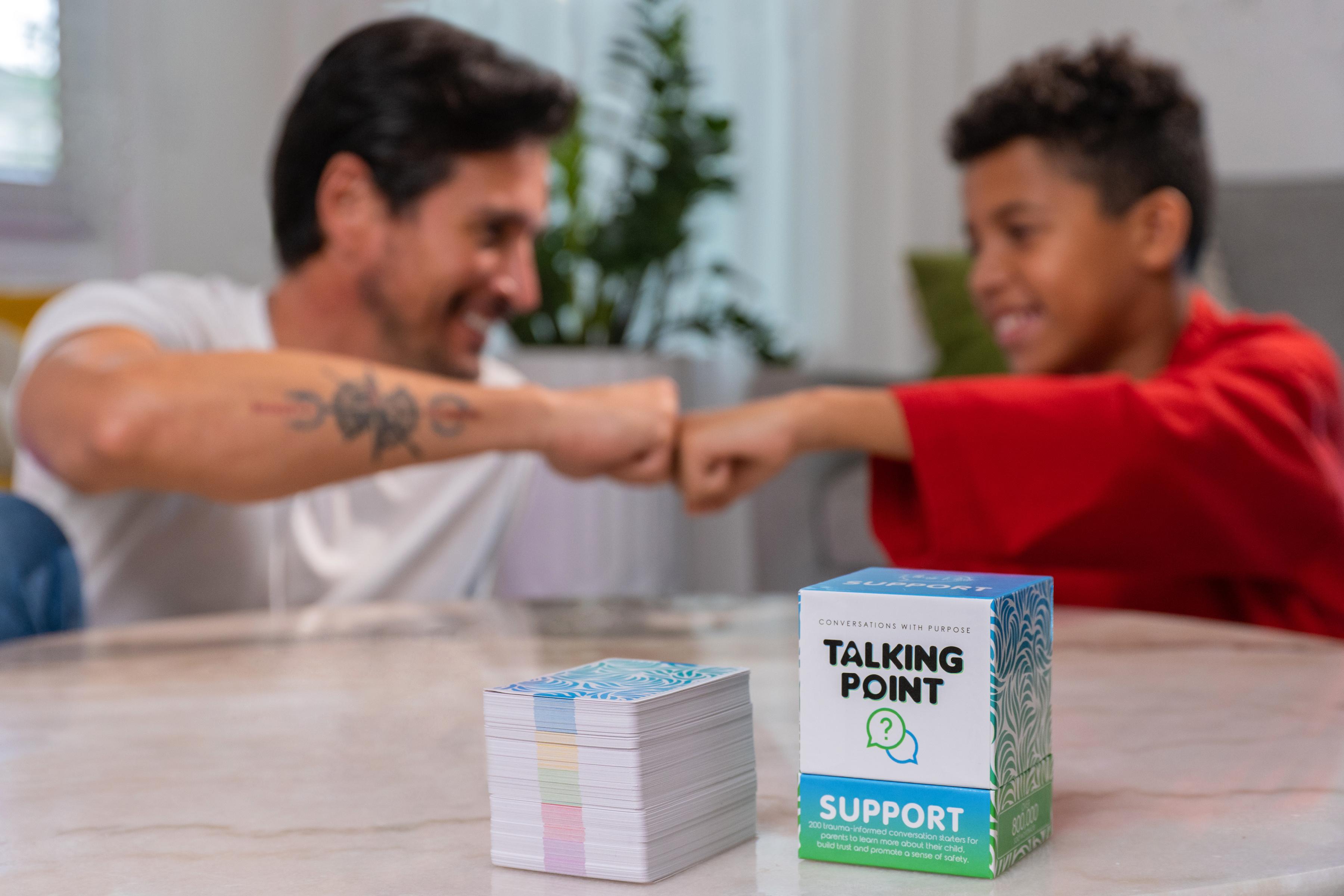
Take the Pressure Off Your Next Emotional Check-In
Stop guessing what is happening behind your child's quiet exterior and eliminate the awkward tension of forced conversations. The Talking Point Cards Support deck provides an expert-approved, psychologically grounded pathway to discover exactly what your child is experiencing. By using structured, gentle prompts, you can effortlessly decode childhood worry, build unshakeable trust, and establish your home as the ultimate safe haven for their emotional growth.
Frequently asked questions
60-day hassle-free returns
Ready to give Talking Point Cards a try? We think you’ll love them, but if not, you’ve got 60 days to return them for free.