- United States (USD $)
 Best Sellers


 All products
 Shop by category


 Bundles
✦
Help me choose
Take the quiz [1 min.]
Bundles
✦
Help me choose
Take the quiz [1 min.]

How to Help Quiet Kids Open Up and Share
Stop asking questions that feel like a test. Discover gentle ways to help shy children find their voice.

>
>
TL;DR
-
Gently encourage quiet children to speak up.
-
Avoid rigid or high-pressure interrogation tactics.
-
Use structured, open-ended question prompts daily.
-
Build deep, lasting confidence through connection.
How can I get my quiet child to talk and share more?
To get a quiet child to talk and share more, parents must shift away from high-pressure interrogation and instead create a low-friction, emotionally safe environment. Implementing structured, open-ended questions for children allows them to share thoughts at their own pace without feeling evaluated. This supportive approach transforms potentially stressful interactions into comforting connection points, helping naturally shy or introverted kids find their voice securely.

Understanding the Silence
Many parents unintentionally turn casual check-ins into an overwhelming performance review for their children. When a child naturally leans toward quiet contemplation, being hit with a barrage of rapid-fire questions can cause them to retreat further into their shell. This defensive withdrawal often creates immense frustration in households, turning what should be a warm family dynamic into an awkward cycle of silence and prodding.
If left unaddressed, this communicative barrier can lead to long-term downstream issues, such as children hiding their true emotions, pulling away from parental guidance, or struggling to articulate their feelings in social environments outside the home.
★★★★★ 1M+ happy customers
Our best conversation starters for romantic questions for couples

Creating a Safe Space to Connect
Breaking this cycle requires a heavy dose of parental empathy, an active recognition of the child's internal pressure, and a completely seamless, low-friction solution. Instead of forcing immediate verbal answers on demand, parents can introduce structured tools that turn communication into an engaging game rather than an intense face-to-face test.
By focusing on intentional, creative prompts, you naturally lower the high barrier to entry that quiet children often face when trying to express their big, complex inner worlds. When you intentionally learn how to teach your kids to express their feelings confidently, you replace the anxiety of performance with a shared, comfortable routine. This gentle shift helps children discover that their voice holds immense value, effectively laying down a durable foundation of safety that naturally encourages them to share thoughts long before a crisis occurs.
Give Your Child a Voice Without the Pressure
You do not have to settle for one-word answers or a silent household. Bring Support into your daily routine to completely eliminate communication anxiety and help your quiet child open up naturally.
A Gentle Breakthrough
"My eight-year-old son has always been incredibly reserved after school, completely shutting down whenever I tried to ask about his day. Using these gentle, structured prompt cards completely removed the pressure, and now he looks forward to sharing his thoughts during dinner without feeling interrogated."
Jon A
Building Trust and Voices
"As a parent of an introverted daughter, finding natural ways to connect without making her feel on the spot was a constant struggle. These cards gave us a simple, playful framework that turned emotional check-ins into our favorite evening habit."
Karen P
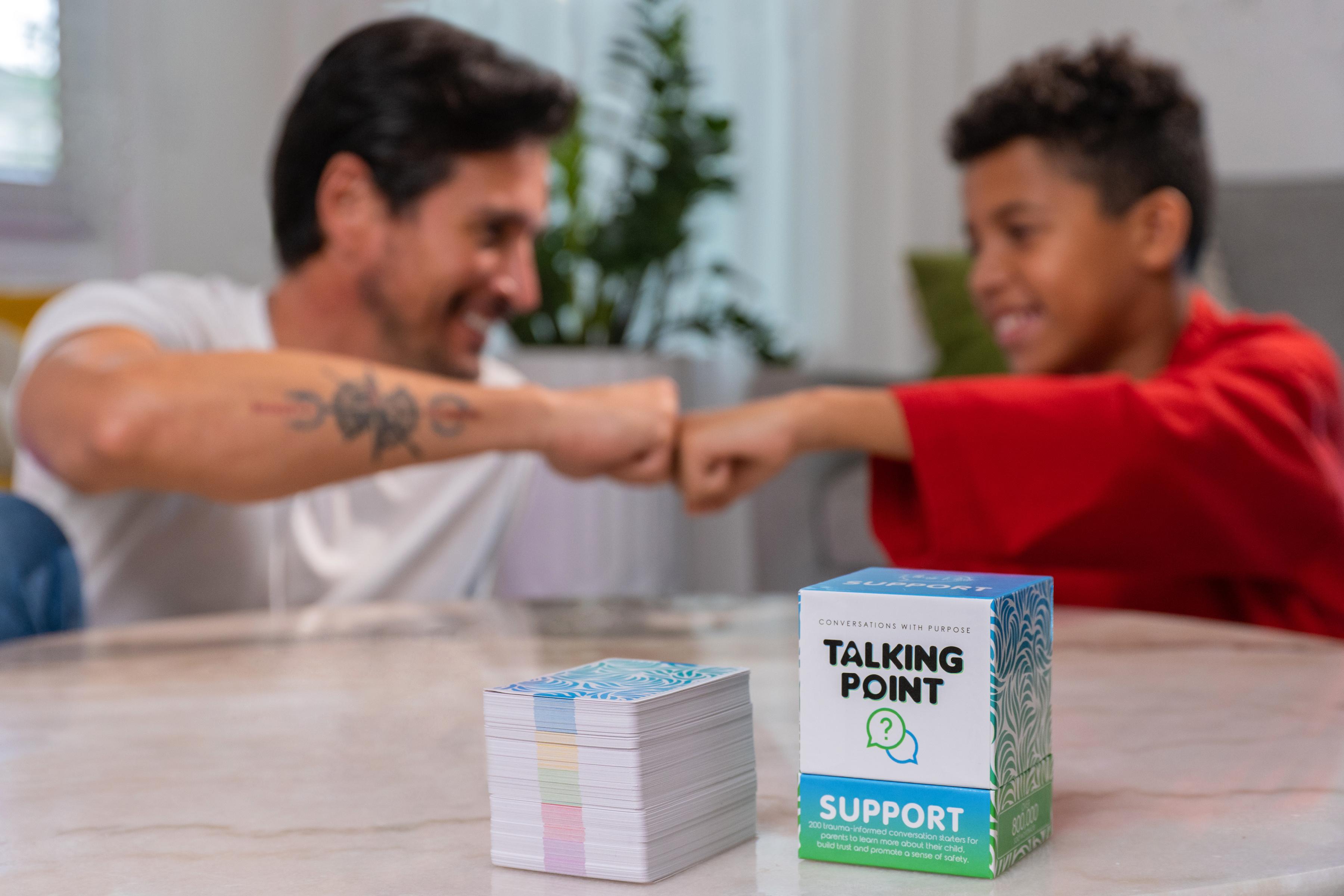
Finding Their Voice
Helping a quiet child share their inner world is not about pushing harder for answers, but about changing the environment in which they are invited to speak. When parents step away from high-pressure check-ins and lean into gentle, predictable routines, communication stops feeling like a performance and starts feeling like a sanctuary.
By utilizing structured tools like conversation cards, you give your child the psychological safety they need to open up at their own pace. Over time, these small, low-stress interactions build a deep foundation of trust and confidence that will serve your child for a lifetime.
Frequently asked questions
60-day hassle-free returns
Ready to give Talking Point Cards a try? We think you’ll love them, but if not, you’ve got 60 days to return them for free.