















































How to Build Lasting Trust and Strong Family Connections
Create a home where every family member feels safe, heard, and truly understood.

>
>
TL;DR
-
Unplug and reconnect as a household team.
-
Heal hidden relational rifts through communication
-
Establish a safe psychological space at home.
-
Build generational trust using structured storytelling.
What are deep questions for family bonding and building trust?
Deep questions for family bonding bypass superficial small talk to target shared memories, emotional support needs, and individual vulnerabilities. Utilizing intentional prompts shifts daily household interactions from routine updates to psychological safety zones, allowing both children and parents to articulate internal anxieties and feel validated. This structured vulnerability fosters generational trust, strengthens emotional resilience, and structurally repairs communication barriers within the household.

Overcoming the Silence: Cultivating Vulnerability at Home
The modern household is moving through an unprecedented epidemic of silent isolation, where physical proximity rarely translates into meaningful emotional intimacy. Despite living under the same roof, family members frequently retreat into individual digital silos, transforming the home into a collection of parallel lives rather than a unified team. When children or partners experience emotional distress, standard pleasantries like "how was your day" simply cannot penetrate the walls of defensive isolation. This communicative drift creates deep relational friction, leaving individuals feeling unseen, misunderstood, and hesitant to share their genuine burdens.
To break this cycle, parents must pivot toward structural vulnerability, utilizing specific prompts that make opening up feel organic rather than interrogative.
★★★★★ 1M+ happy customers
Our best conversation starters for romantic questions for couples

The Cost of Silence: Downstream Relational Tolls
Left unaddressed, routine emotional detachment within a home inevitably yields severe downstream developmental and relational issues. When kids sense that their true feelings or quirky thoughts cannot be safely expressed, they begin externalizing their stress through behavioral defiance, academic decline, or total social withdrawal. Parents, simultaneously burdened by household logistics, mistake this defensive distance for simple teenage moodiness, worsening the relational divide.
Over time, these unvoiced anxieties solidify into structural trust deficits that follow children into adulthood, mirroring the exact patterns seen when partners neglect intimate questions or bypass vital relationship building questions in friendships.
The Bridge to Healing: Transitioning Beyond Digital Noise
True healing begins the moment a family introduces a low-friction, non-threatening bridge to cross this emotional divide. Recognizing the deep pain of an isolated household means validating that vulnerability is terrifying, especially when screen habits have desensitized our conversational muscles. By stepping away from strict interrogations and introducing structured, playful, and emotionally intuitive tools, the pressure to perform completely dissolves. We can easily transition away from digital noise and establish an organic routine where every individual knows their voice carries profound weight, seamlessly mirroring how intentional couples navigate resolving relationship fights or how parents teach emotional intelligence kids without spark-point arguments.
Reconnected My Teenagers
"Our dinner table had become a silent zone of texting and one-word answers. This deck gave us a zero-pressure way to talk about deep fears and big dreams without my kids feeling defensive."
Matt S
Healed Blended Family Rifts
"Bringing our two households together was incredibly tense and filled with silent walls. These cards broke the ice naturally, allowing step-siblings to find common ground and build real trust."
Drew Z
Step Into True Connection
Bring your family back together and replace screen-driven isolation with lasting generational trust.
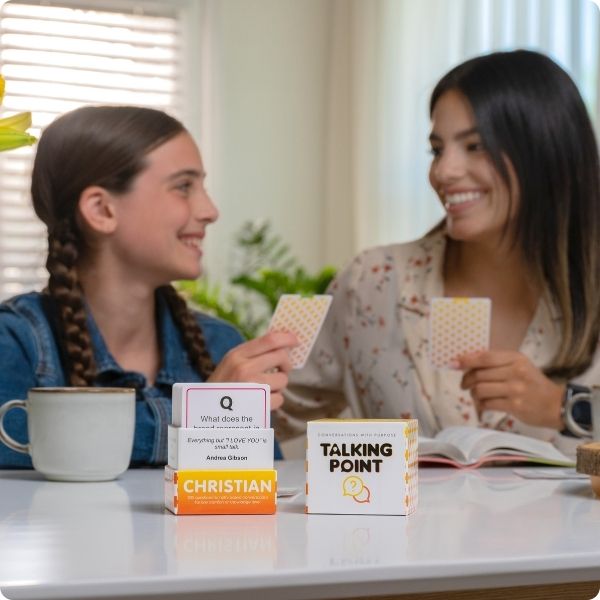
The Talking Point Cards Family Pack is engineered specifically to eliminate the friction of forced conversations, giving your household a simple, field-tested roadmap to real vulnerability. Stop settling for a quiet house of parallel lives. Grab your deck today and establish a home where every single member feels completely safe, deeply validated, and truly understood.
Frequently asked questions
60-day hassle-free returns
Ready to give Talking Point Cards a try? We think you’ll love them, but if not, you’ve got 60 days to return them for free.